
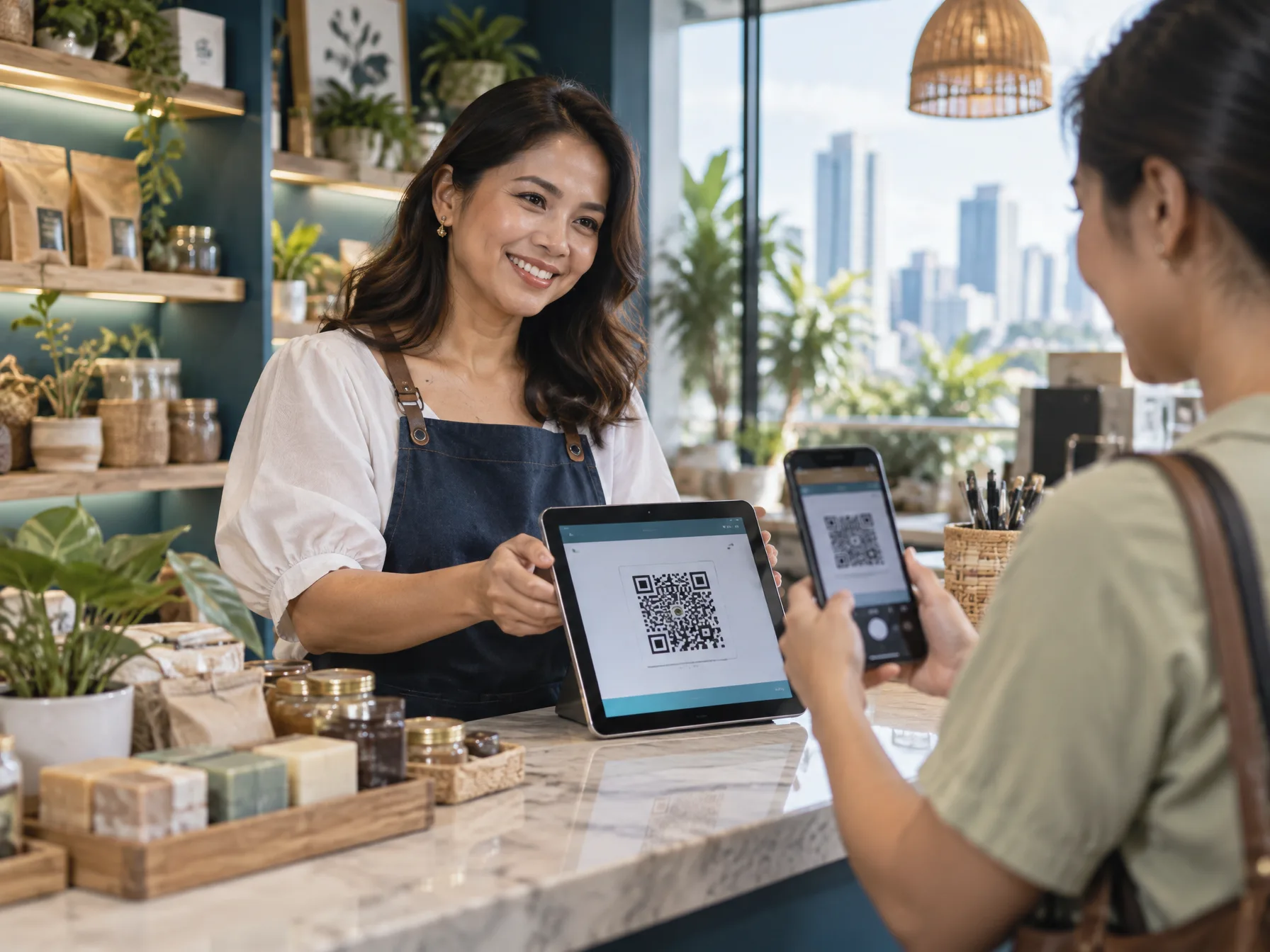
By 31 December 2026, many Philippine businesses that sell online, or that run their books on accounting or invoicing software, must stop handing out paper or PDF invoices and issue structured electronic invoices from BIR-registered systems. As of 3 October 2026, that is 89 days away. This guide explains what is required, who is covered, how to get there from a traditional business or from a start-up, what happens if you get it wrong, and whether it pays off.
P3Myearly gross sales: below it, e-commerce micro taxpayers are exempt for now [8]
P1,000 to P50,000fine for failing to issue an invoice, plus 2 to 4 years in prison on the books [9]
3 daysreported window to send each invoice to the BIR system (final specs not published) [6]

A quick correction on the name. There is no single law called the "E-Invoicing Act". The rules come from several layers: the Ease of Paying Taxes (EOPT) Act (RA 11976) made the invoice the main proof of a sale; the CREATE MORE Act (RA 12066) and RR 11-2025 set up e-invoicing and e-sales reporting; RR 26-2025 moved the deadline; and RMC 98-2026 (22 September 2026) gave the practical rules.[2][3][5] This article is general information, not legal or tax advice.
How we got here: the timeline
The rules arrived in layers over three years. The 31 December 2026 date is the first wave, not the last.
Source: Grant Thornton PH, Orkids guide, BIR RMC 98-2026 coverage, Taxumo on RR 3-2025. Month-level dates for RR 26-2025 vary across sources, so it is shown as late 2025.
Who has to comply?
The first wave (deadline 31 December 2026) covers four groups: small, medium and large taxpayers doing e-commerce or internet transactions; taxpayers under the Large Taxpayers Service; large taxpayers as defined under the EOPT Act; and taxpayers using a computerised accounting system (CAS), computerised books of accounts (CBA) or other invoicing software.[3][4] Micro taxpayers in e-commerce are excluded for now. Exporters, tax-incentive registered enterprises and users of point-of-sale (POS) systems come in later waves, with no date yet.[6]
Cross P3 million in yearly gross sales and you are no longer "micro". An online seller above that line is in the first wave.
Source: PwC Philippines and BIR EOPT flyer (class thresholds); RMC 98-2026 coverage via Grant Thornton PH.
Two quick questions catch most businesses. If you are still unsure, ask your accountant or your Revenue District Office.
Source: Our reading of RMC 98-2026 coverage. The BIR has not published a plain definition of "e-commerce or internet transactions", so borderline cases need professional advice.
Gross sales means sales net of VAT, from your business only. Salary, passive income and tax-exempt income are not counted when you classify yourself.[8]
What the digital invoice must be
Under RMC 98-2026, an invoice counts as an electronic invoice only if it meets all three tests.[3][4]
1. Made by approved software
Generated by a duly registered, approved or accredited accounting or invoicing system, in a structured electronic format.
2. Delivered electronically
Sent to the buyer by email, online portal, QR code, mobile app or a web platform.
3. Data the BIR can read
The data must be capable of electronic extraction and transmission for BIR reporting. The system, not a person, produces the data.
| What you issue today | As an e-invoice? |
|---|---|
| Paper invoice from a booklet or receipt printer | Does not count |
| A Word, Excel or Google Docs invoice sent as PDF | Does not count |
| System-generated invoice that you only print on paper | Does not count. Printing alone does not make it electronic |
| Structured invoice from registered or accredited software, delivered by email, portal or QR, with data the BIR can extract | Counts |
What you must do technically (as reported so far)
- Transmission. Industry guides describe each invoice as structured JSON, signed with a JSON Web Signature (JWS), and sent to the BIR Electronic Invoicing System (EIS) by API within three calendar days, with an immediate accept or reject reply.[6] The BIR has not yet published the final technical specifications, so treat these details as provisional.[10]
- Approval. Descriptions differ. One law-firm summary says you need a Permit to Issue Electronic Invoice (PTI) from your Revenue District Office and an EIS certification within six months, or the PTI can be revoked.[4] Another guide says an Acknowledgement Certificate replaces the old Permit to Use.[6] Confirm the current process with your RDO.
- Corrections. If the amount goes down, issue an authorised credit note. If it goes up, issue a new e-invoice. Editing an issued invoice is not allowed.[4]
- Downtime. If the system is down because of an outage, power cut or cyber incident, you may issue a BIR-authorised manual invoice, then replace it with an e-invoice that references the manual number once you are back online.[4][7]
- Providers. You may build in-house, buy software, or use an e-invoicing service provider (ESP). As of the guides we read, the BIR had not accredited any ESP, and rules for ESPs will come in a separate issuance.[3][4]

Does a digital service business have to comply?
Almost certainly yes if you are not micro. A business that sells subscriptions, software, courses, bookings or listings through a website or app is doing "internet transactions", and any such business that also uses invoicing or accounting software is covered by two of the four first-wave groups. Micro start-ups under P3 million are excluded for now, but they are exactly the ones likely to cross the line within a year or two.
Do not confuse two different rules. E-invoicing (this article) is about how you issue invoices and report them. VAT on digital services (RR 3-2025, from June 2025) is about who charges 12% VAT, mainly on foreign digital providers selling to Philippine users.[11] A Philippine start-up may have to deal with both, and one does not replace the other.
How to execute from a traditional business

If you run a shop, clinic, restaurant, school, landlord operation or distributor on paper, work in this order.
- Confirm coverage. Check your gross sales class, whether you sell online, and whether your books or POS run on software. Ask your accountant to put it in writing.
- Stop using Official Receipts as proof of sale. Since the EOPT rules, the invoice is the main evidence of sale, and an official receipt for sales after 30 June 2024 is treated as a failure to issue an invoice. Receipts may still be used as supporting proof of payment.[12]
- Map how a sale is recorded today. Where does the sale first appear: a booklet, a till, a chat message, a spreadsheet? E-invoicing needs the data to start in one system.
- Pick a system that can issue structured e-invoices. Ask vendors for their BIR registration or accreditation status, how they will send data to the EIS, and what they charge when the BIR specification changes.
- Clean your master data. Customer names, TINs, addresses, VAT status and product or service descriptions. Bad data produces rejected invoices.
- Pilot with one branch or product line, then roll out. Keep the manual-invoice downtime procedure written down.
- Train the counter staff. The most common failure will not be the software; it will be a cashier who reverts to the old booklet when the line is long.

How to execute from a start-up digital business

- Treat invoicing as a product feature. Every paid event (subscription, renewal, refund, top-up) should create an invoice record in one place, with a unique, sequential number.
- Decide build, buy or integrate. Under about a few hundred invoices a month, buying or integrating a compliant invoicing tool is usually cheaper than building. Once volume or custom billing grows, an API-based integration with an ESP or in-house service may pay off. No ESP is BIR-accredited yet, so keep your design swappable.
- Separate the invoice from the payment. Payment gateways (GCash, Maya, cards) issue payment confirmations, not BIR invoices. Your system must still issue the invoice.
- Build the correction and refund flow early. Credit notes for reductions, new invoices for increases, never edits. Refunds and chargebacks are where start-ups usually break the sequence.
- Log everything. Store the signed payload, the transmission time and the BIR reply for each invoice. If a send fails, retry and alert; do not let it silently drift past the reporting window.
- Watch the P3 million line. Track trailing gross sales. Plan to be compliant before you cross it, not after.
- Handle customer data lawfully. Invoices carry names, addresses and TINs. Apply the Data Privacy Act (RA 10173): collect only what the invoice needs and secure it.

| Traditional business | Digital start-up | |
|---|---|---|
| Biggest risk | Staff and habits; paper still in use | Integration gaps; refunds and sequence errors |
| Starting point | Booklet, till or old POS | Billing system or payment gateway only |
| Best first move | Pick compliant POS or invoicing software; pilot one branch | Make invoicing a core feature; buy or integrate first |
| Main cost | Software, hardware, training | Engineering time, vendor fees, audit logs |
| Typical timeline | 6 to 10 weeks | 3 to 8 weeks |
Timelines are our planning estimates, not BIR figures.
Thirteen weeks is enough only if you start now. The slowest step is usually vendor approval and testing, not the software.
Source: Planning estimate by ManilaOpenHouse, based on the 31 Dec 2026 deadline.
What happens if you do not comply?
The BIR says violations fall under Sections 264 and 264-A of the Tax Code, which can mean fines and imprisonment.[3] Penalties apply only after the mandated dates, so until 31 December 2026 the exposure is mostly the cost of being late to prepare.[9] The figures below come from a commercial compliance guide that summarises the Tax Code, not from the BIR itself. Check them with your accountant or counsel.
| Violation | Reported penalty |
|---|---|
| Failure to issue an invoice | P1,000 to P50,000 fine and 2 to 4 years in prison; compromise from P10,000 |
| Invoice that misstates the transaction | Same range; compromise from P5,000 |
| Unregistered invoicing system or machine | P25,000 per unit (first offence), P50,000 (second) |
| Failure to transmit to the EIS | Higher of 0.1% of prior-year net income or P10,000 per day |
| Non-transmission beyond 180 days | Permanent closure order |
| Official receipt used as proof of sale (after 30 June 2024) | Treated as non-issuance of an invoice |
For a business with P20 million in prior-year net income, the reported formula is P20,000 a day, or P3.6 million over 180 days. Small businesses face the P10,000 floor.
Source: Our arithmetic on the "higher of 0.1% of prior-year net income or P10,000 per day" rule reported by ClearTax PH. Illustrative only; the final rule may differ.
The EOPT Act also reduced penalties for micro and small taxpayers, so classification matters here too.[8] The practical danger for a small business is not one fine. It is a long gap between sales and reporting that slowly adds up to the closure threshold.
Why is the government doing this?
- Close the VAT leakage. When invoices are machine-readable and reported close to real time, it is harder to under-declare sales or claim input VAT on invoices that do not match.
- Catch up with a digital economy. Online selling and app-based services leave no paper trail for traditional audits.
- Make filing easier. The EOPT and CREATE MORE reforms aim to simplify compliance, and the BIR plans electronic sales reporting to replace manual encoding.[5][10]
- Follow a global pattern. Chile, Mexico, Brazil, Italy and Spain already require some form of e-invoicing, and the OECD promotes it as part of "Tax Administration 3.0".[13]
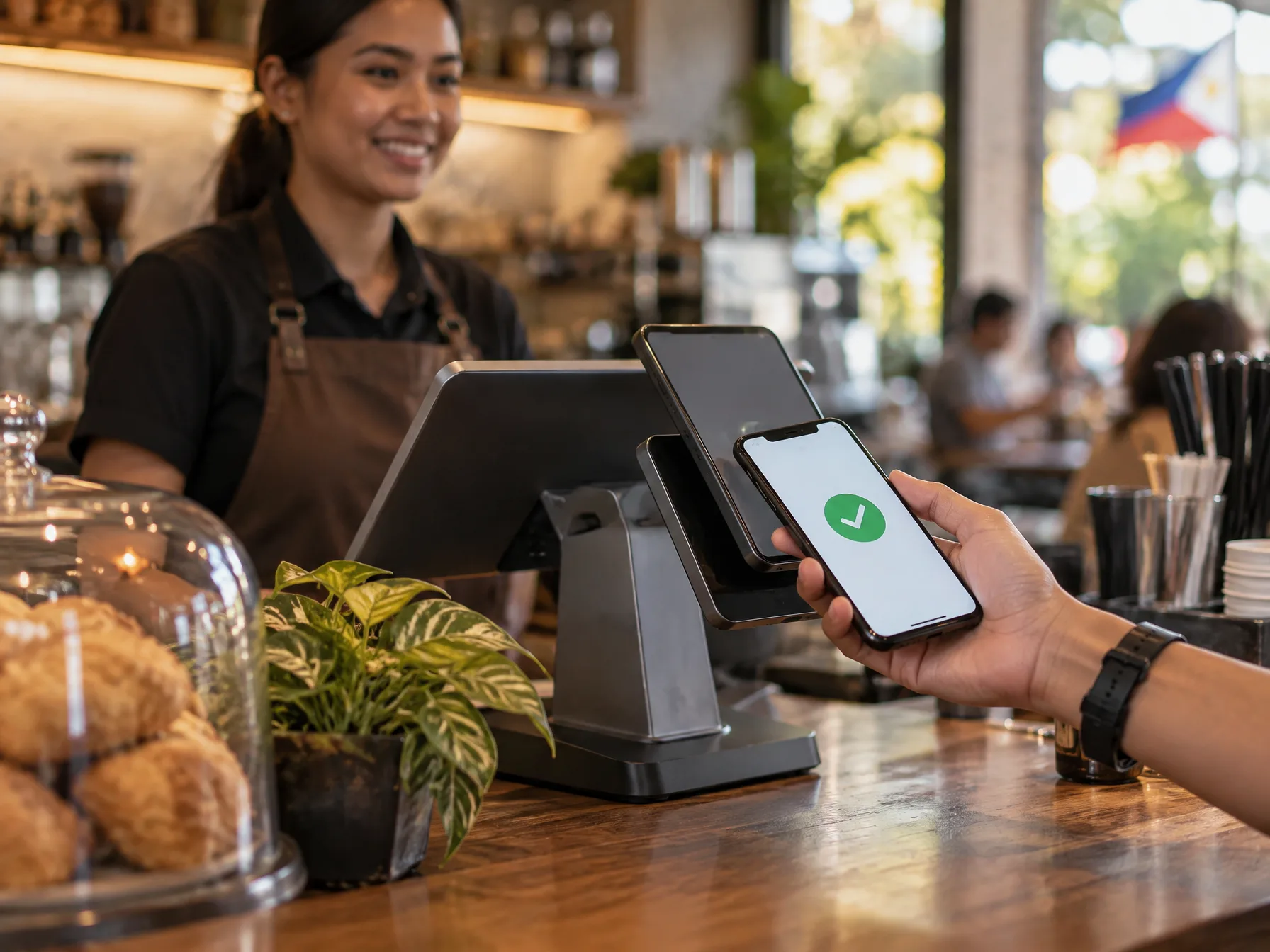
What do businesses gain? Is it a long-term benefit?
Our honest answer: yes, mostly, but not for free and not immediately. The evidence is stronger for governments than for individual firms.
Likely gains
Fewer manual errors, faster bookkeeping and reconciliation, cleaner audit trail, smoother VAT input claims, and a record that stands up when a customer or the BIR asks.
Likely costs
Software and integration fees, staff training, data clean-up, and ongoing changes while the BIR specification is finalised.
Open risks
No accredited ESPs yet, final technical specs not published, e-sales reporting timeline unclear, and the first year may bring rework.
Italy cut its VAT gap by about a quarter in two years. Reported results for Chile and Mexico are larger, but they come from different periods and methods, so do not read them as a promise for the Philippines.
Source: Italy VAT gap and e-invoicing estimate: Springer (2023) and related studies; Mexico revenue figure and Chile/Mexico VAT-gap summaries: World Bank Policy Research Working Paper 7592 and industry summaries. Figures are shown as published.
For firms, studies report that e-invoicing within a clearance model can cut tax compliance costs by roughly 37 to 39% for corporates, and by a wider 8 to 56% range for others, compared with legacy systems.[14] Those figures come from a vendor-published summary and from other countries, so treat them as a direction, not a forecast. Over the long term, businesses that digitise invoicing early tend to gain a second benefit: clean sales data that helps with financing, due diligence and growth decisions.
More to know before you decide
E-invoicing is not e-sales reporting
They are separate. The BIR has said the electronic sales reporting guidelines will follow, so build a system that can add that later.
Vendor questions to ask
Is the product BIR-registered? How is data signed and sent? What happens when the BIR spec changes? Where is data stored, and can you export it? What is the downtime procedure?
Records and branches
If you have several branches or systems, approvals may be per system or branch. Keep invoice sequences, logs and credit notes organised from day one.
If you rent out or sell property
Landlords, brokers and developers who are VAT-registered or operate as a business should ask their accountant what applies to rent, commissions and fees. Listing fees on ManilaOpenHouse carry their own VAT invoice.
Marketplaces and platforms
If you sell through a platform, find out whether the platform issues invoices on your behalf or you must issue your own. Do not assume.
Common mistakes
Emailing PDFs and calling it done; editing invoices after issue; ignoring refunds; waiting for December; picking a tool without checking BIR status.

Start with a checklist, not a vendor.
This week: (1) confirm your taxpayer class, (2) list every place a sale is recorded today, (3) ask your accountant if you are in the first wave, (4) shortlist two compliant tools. Questions about ManilaOpenHouse listings? Write to manilaopenhouse@gmail.com.
Frequently asked questions
Is a PDF invoice sent by email enough?
No. RMC 98-2026 says a manually created Word, Excel or Google Docs invoice sent digitally does not qualify, and a system invoice that is only printed does not either. It must come from registered or accredited software and be capable of data extraction and reporting.
I am micro (under P3 million). Do I have to do anything?
Micro e-commerce taxpayers are excluded from the first wave. But you must still follow the EOPT invoicing rules (invoice, not official receipt), and later waves may reach you. Choose tools that can upgrade.
Do I need an ESP?
No. You may use an in-house tool, commercial software or an ESP. As of the guides we read, no ESP had been accredited by the BIR.
Will there be fines before 31 December 2026?
Reports say penalties apply only after the mandated dates. Prepare now anyway: approvals and testing take weeks.
Are the figures here final?
No. Technical specifications, ESP rules and e-sales reporting are still being finalised, and our penalty figures come from a compliance guide. We will update this article when the BIR publishes more.
Sources
- Manila Bulletin, "BIR orders e-commerce, large taxpayers to switch to electronic invoices", 23 Sep 2026. https://mb.com.ph/2026/09/23/bir-orders-e-commerce-large-taxpayers-to-switch-to-electronic-invoices
- BIR, Revenue Regulations No. 26-2025 digest. https://bir-cdn.bir.gov.ph/BIR/pdf/RR%20No.%2026-2025%20Digest.pdf
- BIR press release, 23 Sep 2026, electronic invoicing rules ahead of December. https://bir-cdn.bir.gov.ph/BIR/pdf/PR101SEP2326.pdf
- Grant Thornton PH, RMC No. 98-2026: policies and guidelines on the issuance of electronic invoice. https://www.grantthornton.com.ph/insights/articles-and-updates1/tax-notes/rmc-no-98-2026-prescribing-policies-and-guidelines-on-the-issuance-of-electronic-invoice-under-rr-no-8-2022-and-rr-no-11-2025-as-amended-by-rr-no-26-2025/
- Grant Thornton PH, "Ready or not: Philippines' shift to e-invoicing and electronic sales reporting". https://www.grantthornton.com.ph/insights/articles-and-updates1/lets-talk-tax/ready-or-not-philippines-shift-to-e-invoicing-and-electronic-sales-reporting/
- Orkids, BIR EIS and e-invoicing guide (RR 11-2025). https://orkids.ph/guides/bir-eis-e-invoicing
- BusinessMirror, "Are your systems ready for e-invoicing by December 31, 2026?", 29 Sep 2026. https://businessmirror.com.ph/2026/09/29/are-your-systems-ready-for-e-invoicing-by-december-31-2026/
- PwC Philippines, new taxpayer classifications under the EOPT law. https://www.pwc.com/ph/en/tax/tax-publications/taxwise-or-otherwise/2024/new-taxpayer-classifications-under-the-eopt-law.html
- ClearTax PH, BIR e-invoicing penalties (commercial summary; verify with counsel). https://www.cleartax.com/ph/bir-e-invoicing-penalties-philippines
- Aurea Dada Law, BIR electronic invoicing rules under RMC 98-2026. https://www.aureadalaw.com/post/bir-electronic-invoicing-rules-under-rmc-no-98-2026-what-philippine-businesses-need-to-know-before
- Taxumo, BIR RR 3-2025 and 14-2025: VAT on digital services. https://www.taxumo.com/blog/understanding-bir-revenue-regulations-3-2025-and-14-2025-vat-on-digital-services-in-the-philippines/
- PwC Philippines, compliance change on invoicing under EOPT. https://www.pwc.com/ph/en/tax/tax-publications/taxwise-or-otherwise/2024/compliance-change-on-invoicing-under-eopt.html
- OECD, Tax Administration 3.0 and electronic invoicing (2022). https://www.oecd.org/content/dam/oecd/en/publications/reports/2022/09/tax-administration-3-0-and-electronic-invoicing_59ac73c5/2ffc88ed-en.pdf
- Thomson Reuters, the rise of e-invoicing clearance models across the world (cost-saving ranges). https://europe.thomsonreuters.com/blog/e-invoicing-ctc-models
- World Bank, Policy Research Working Paper 7592: Can electronic tax invoicing improve tax compliance?. https://openknowledge.worldbank.org/server/api/core/bitstreams/88d81ba1-aed8-572f-bb52-4b46a8244adf/content
- Springer, "Digitalization and cross-border tax fraud: evidence from e-invoicing in Italy" (2023). https://link.springer.com/article/10.1007/s10797-023-09820-x
Research date: 3 October 2026. Rules and BIR guidance are still being issued, so check the BIR website before acting. Some official PDFs could not be read directly; we used law-firm and industry summaries and note this where it matters. Images are AI-generated photorealistic renders.
Photos






Related articles

Floor Plan to 3D: AI Video for Philippine Property Listings
If you are selling a Manila home, you can now turn its floor plan into a furnished 3D walkthrough before a buyer visits. Across 2025–2026, editable plan…
 ▶ Video
 4 Green Certifications, 1 Tower: How Sondris by Arthaland Earns LEED, WELL, EDGE & BERDE
Most Philippine condominiums pursue one green-building certification, if any. Sondris, the Arthaland x Mitsui Fudosan tower rising in Legazpi Village, Makati,…
 ▶ Video
 Location First: How to Judge a Property Before You Buy
You can renovate a kitchen, repaint a wall, and even replace a roof, but you cannot move a property to a better street. That's why location should be the very…