

If you rent out a condo on Airbnb, lease apartments, sell property for a commission, manage other people’s units, or fix and clean them for a living, the BIR expects you to keep a journal and a ledger. This guide shows what they are, how to start them on day one, how to record real-looking transactions, and what happens if you do not. We have added eight small calculators so you can try it with your own numbers.
₱3MGross-sales line for VAT registration and for mandatory CPA-audited books[2]
5 yearsMinimum retention of books after EOPT, counted from the day after the filing deadline[3]
10% / 6%Surcharge / interest for micro and small taxpayers (vs 25% / 12%)[3]
31 Dec 2026E-invoicing deadline for covered taxpayers (micro taxpayers are exempt)[34]
Not tax advice. This is a general guide written on 9 October 2026 from public sources listed at the end. Tax rules change by regulation and memorandum circular. Before you elect a tax option, register books, or answer a BIR notice, confirm with your Revenue District Office (RDO) or a CPA. Where we could not confirm a point on an official source, we say so. Contact: manilaopenhouse@gmail.com.
Photos in this article are AI-generated illustrations, not pictures of real clients, offices or BIR staff.

1. What a journal and a ledger actually are
Think of your phone’s photo gallery and your contacts list. The gallery is in the order things happened. The contacts list is grouped by person. Accounting works the same way.
- The journal is the diary: every transaction, in date order, written once, with the accounts it touches and the amounts. Nothing is grouped yet.
- The ledger is the filing cabinet: one page (an “account”) for Cash in Bank, one for Rental Income, one for Utilities, and so on. Each journal entry is copied (“posted”) onto those pages, so you can see at a glance how much is in the bank or how much rent you earned this quarter.
The statute asks for this directly. Section 232 of the National Internal Revenue Code (NIRC) says persons required to pay internal revenue taxes must keep books; the original 1997 text refers to “a journal and a ledger or their equivalents”, and the TRAIN amendment now speaks of a “relevant and appropriate set of bookkeeping records” from which all taxes can be readily and accurately determined at any time of the year.[1][2] In plain English: your records must let a stranger rebuild your income, expenses and taxes without guessing.
- DocumentInvoice, bill, bank record, payout statement
- JournalWrite the entry: debits equal credits
- LedgerPost to each account’s page
- Trial balanceCheck that total debits equal total credits
- AdjustDepreciation, accruals, prepaid items
- StatementsIncome statement and balance sheet
- Tax returnsPercentage tax, VAT, income tax, withholding
Key idea: the trial balance only proves your arithmetic. It does not prove that you recorded every sale. Completeness comes from habits: depositing everything to a business account, reconciling platform payouts, and keeping a document for every entry.

2. Do you legally need them? Who this applies to
Short answer: yes, if you pay any internal revenue tax. Section 232 covers all corporations, companies, partnerships or persons required by law to pay internal revenue taxes. We found no size exemption in the statute text. Having only two rental units, or selling only through Facebook or Airbnb, does not take you out of it.[1][2] The old “simplified records” tier for quarterly sales of ₱50,000 or less belonged to the 1997 text; what format the BIR accepts for the smallest businesses today is not spelled out in the sources we could read, so ask your RDO. One commentator notes that practice tolerates simple books for micro enterprises so long as income and expenses can be reconstructed.[42]
| Size class (RR 8-2024) | Gross sales | What changes |
|---|---|---|
| Micro | Below ₱3M | Reduced EOPT penalties; exempt from mandatory e-invoicing; may use the 8% option if not VAT-registered; no mandatory CPA audit by this test |
| Small | ₱3M to below ₱20M | Reduced EOPT penalties; above ₱3M you must register for VAT and have books audited by an independent CPA, with an Account Information Form (AIF) in the income tax return[2] |
| Medium | ₱20M to below ₱1B | Standard penalties (25% surcharge, 12% interest) |
| Large | ₱1B and above | Standard penalties; first in line for new digital systems |
Classification comes from RR 8-2024 and the thresholds are as summarised by PwC and Grant Thornton.[10][38] Two details people miss. First, the 8% income tax option does not remove the duty to keep records; it only replaces graduated income tax and percentage tax. Second, a search summary suggests that 8% filers need not attach financial statements to the annual return, but we could not confirm that on the regulation itself, so check before relying on it.
Use the checker below to see which books, tax type, and forms apply to your situation.

How long to keep your books
After the EOPT Act (RA 11976), Section 235 says to preserve books for five years, counted from the day following the deadline for filing the return, or from the actual filing date if you filed late. Computerized books must be kept electronically, and you hold on longer while a protest or refund is pending.[3][4] That replaced the older ten-year habit. Our practical recommendation is still ten years, because the BIR can assess within ten years from discovery if a return was fraudulent, false, or never filed (Section 222), and the ordinary window is three years (Section 203).[1] Storage is cheap. Reconstructing a missing year is not.
3. Starting the business: registration checklist and registering your books
Order matters. Tax registration comes before you issue your first invoice, and books come before the deadline of your first return. A workable sequence:
- Register the business name or entity. Sole proprietors register a business name; corporations and OPCs register with the SEC. RR 7-2024 also expects each business name, including online store names, to be registered.[4]
- Get your LGU permits. Mayor’s or business permit and barangay clearance. For Airbnb-type hosting, the Department of Tourism (DOT) Progressive Accreditation System has Basic Registration, Regular and Premium tiers, and accreditation is sometimes needed before an LGU grants the permit.[23][24] Whether a newer national short-term-rental rule applies in 2026 is not confirmed in our sources.
- Register with the BIR once. Section 236 as amended lets you register once, electronically or manually, with your RDO within 10 days of starting, or before paying any tax or filing a return. Individuals typically use Form 1901, corporations 1903, and updates 1905. The ₱500 annual registration fee no longer exists.[3][9]
- Choose your tax type. Percentage tax (3%), VAT (12%, mandatory above ₱3M), or for eligible individuals the 8% option, elected on the first-quarter return.
- Get your invoices. Since EOPT, the sales or service invoice is the primary document, including for services; official receipts are supplementary proof of payment. Issue one for sales of ₱500 or more (VAT-registered sellers: any amount) or whenever the buyer asks. The authority to print is free.[3][43]
- Pick a books format. Reported options are manual (bound), loose-leaf, or computerized, per RMC 65-2025; new registrants may choose any one.[6] Loose-leaf needs a Permit to Use, printed and permanently bound pages in BIR format, and a notarized statement of volume and page count; computerized books are kept electronically.[8]
- Register the books through ORUS. Since RMC 3-2023 registration is online at the Online Registration and Update System, and a QR code replaces the manual stamp.[5][6]
| Books type | When |
|---|---|
| New registrant | Before the deadline of your first quarterly or annual income tax return, whichever is earlier[6] |
| Manual (bound) | Before use, and again before pages run out; no yearly re-registration[6] |
| Loose-leaf | Within 15 days after year-end[5]. For taxable year 2025 the date was moved to 31 January 2026 (RMC 004-2026)[7] |
| Computerized | Within 30 days after year-end[5]. For taxable year 2025: 17 February 2026[7] |
RMC 004-2026 also says ORUS is the channel; manual registration at the RDO is for when ORUS is officially down. Loose-leaf invoices and receipts still go through the RDO manually.[7] We expect similar dates for taxable year 2026 (late January for loose-leaf, mid-February for computerized) but no circular for 2027 exists yet, so treat that as a pattern, not a deadline.
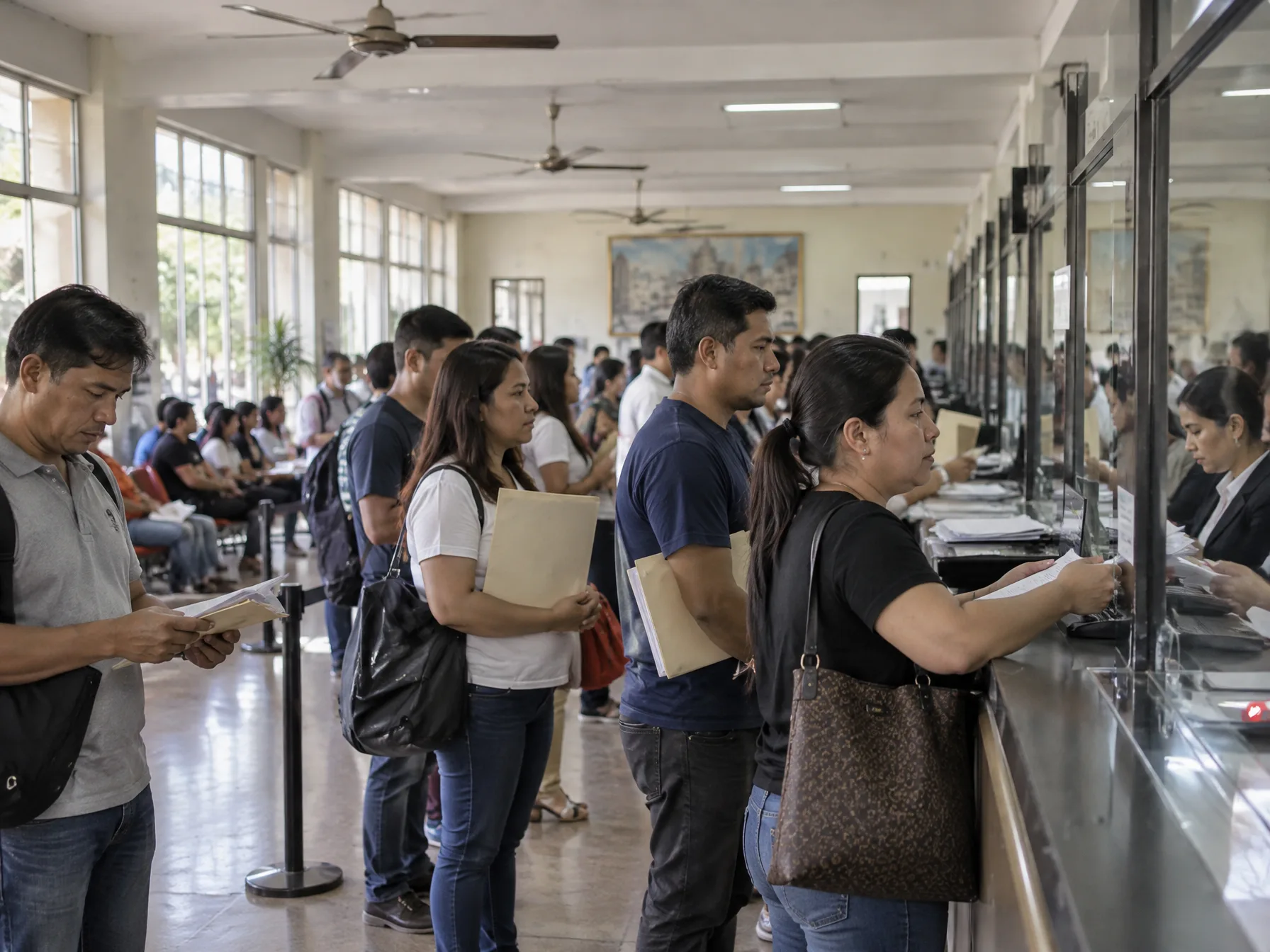
Why register books at all? Failing to keep or register books can lead to a compromise penalty and, in the worst case, criminal exposure if the failure is willful. It also hands the BIR the “best evidence obtainable” argument if it ever audits you. See section 14.
4. Debit and credit in five minutes
Forget the idea that debit means “bad” or “money out”. Debit just means left side. Credit means right side. Which side increases an account depends on its type, and the system rests on one equation:
Assets + Expenses (+ Owner’s Drawings) = Liabilities + Capital + Revenue. Each entry puts equal amounts on the left and the right, so the equation never breaks.
| Account type | Increases with | Decreases with | Normal balance | Examples |
|---|---|---|---|---|
| Asset | Debit | Credit | Debit | Cash, receivables, equipment |
| Expense | Debit | Credit | Debit | Utilities, repairs, platform fees |
| Owner’s drawings | Debit | Credit | Debit | Money you take out for personal use |
| Liability | Credit | Debit | Credit | Payables, tenant deposits, tax payable |
| Capital / equity | Credit | Debit | Credit | Owner’s capital |
| Revenue | Credit | Debit | Credit | Rental, booking, commission income |
Two-step test for any transaction: (1) which accounts are touched? (2) is each one going up or down? Paying ₱2,500 of electricity from the bank: Utilities Expense goes up (debit), Cash in Bank goes down (credit). Receiving rent: Cash goes up (debit), Rental Income goes up (credit). Receiving a tenant’s security deposit: Cash goes up (debit), and you now owe the money back, so Tenant Deposits Payable goes up (credit), which is a liability, not income.
Practise below. The trainer draws 12 random transactions from a bank of more than 24 and shows the rule behind each answer.
A starter chart of accounts
The chart of accounts is your list of ledger pages. The BIR does not prescribe account names or codes, so the table below is a suggestion that fits all five business types in this guide. Start small; add an account only when you need to report on it.
| Code | Account | Type | Normal | Typical use |
|---|---|---|---|---|
| 1000 | Cash on Hand | Asset | Dr | Petty cash, cash from tenants |
| 1010 | Cash in Bank | Asset | Dr | Business account balance |
| 1020 | GCash / Maya Wallet | Asset | Dr | E-wallet balances |
| 1100 | Accounts Receivable | Asset | Dr | Unpaid rent, unpaid job invoices |
| 1200 | Creditable Withholding Tax (2307) | Asset | Dr | Tax withheld by your clients, claimed later |
| 1300 | Prepaid Expenses | Asset | Dr | Insurance, annual permits paid early |
| 1400 | Supplies | Asset | Dr | Linens, cleaning stock not yet used |
| 1500 | Furniture and Equipment | Asset | Dr | Beds, appliances, tools, laptop |
| 1510 | Accumulated Depreciation | Contra-asset | Cr | Running total of depreciation |
| 2000 | Accounts Payable | Liability | Cr | Bills you owe suppliers |
| 2010 | Customer / Tenant Deposits Payable | Liability | Cr | Security deposits, reservation fees held |
| 2020 | Due to Owners | Liability | Cr | Property manager: rent held for owners |
| 2100 | Withholding Tax Payable – Expanded | Liability | Cr | Tax you withheld from others |
| 2200 | Output VAT Payable | Liability | Cr | VAT-registered only |
| 2210 | Percentage Tax Payable | Liability | Cr | 3% of quarterly gross, non-VAT |
| 2400 | Loans Payable | Liability | Cr | Bank or personal loans |
| 3000 | Owner’s Capital | Equity | Cr | Money you put in |
| 3010 | Owner’s Drawings | Equity (contra) | Dr | Money you take out |
| 4000 | Rental Income | Revenue | Cr | Leasing |
| 4010 | Airbnb / Booking Income | Revenue | Cr | Gross room revenue |
| 4020 | Commission Income | Revenue | Cr | Brokerage |
| 4030 | Management Fee Income | Revenue | Cr | Property management |
| 4040 | Service / Labor Income | Revenue | Cr | Repairs, cleaning |
| 4050 | Materials Income | Revenue | Cr | Parts billed to client |
| 5000 | Direct Costs (materials, splits) | Expense | Dr | Job materials, co-broker splits |
| 5100 | Salaries and Wages | Expense | Dr | Helpers, staff |
| 5210 | Utilities | Expense | Dr | Electricity, water, internet |
| 5220 | Repairs and Maintenance | Expense | Dr | Fixing units |
| 5230 | Cleaning and Laundry | Expense | Dr | Turnovers between guests |
| 5240 | Platform / Commission Fees | Expense | Dr | Airbnb host fee, payment fees |
| 5250 | Marketing and Advertising | Expense | Dr | Boosted posts, listings |
| 5260 | Association Dues and Real Property Tax | Expense | Dr | Condo dues, RPT paid to LGU |
| 5280 | Taxes and Licenses | Expense | Dr | Percentage tax, permits |
| 5290 | Depreciation Expense | Expense | Dr | Spreading the cost of equipment |
Corporations add Retained Earnings (3100) and Income Tax Expense. VAT-registered businesses add Input VAT. Land is never depreciated; for a lessor, depreciation applies to the building and furnishings only.
5. The journal: format and habits
A general journal page has five columns: Date, Particulars (the accounts; debit account first, credit account indented), Reference (invoice, bank slip or payout statement number, plus the ledger code once posted), Debit, and Credit. Under each entry, write a one-line narration: “Guest booking, Unit 12B, 3 nights”.
The BIR’s statute talks about a general journal and ledger; many businesses add subsidiary books for volume (Section 233 makes them optional). The usual set is below. The list is common accounting practice rather than a BIR-prescribed list, so we cannot say the BIR requires each of them.
| Book | What goes in it | Best for |
|---|---|---|
| General Journal | Everything not recorded elsewhere: opening balances, adjustments, depreciation | Everyone |
| General Ledger | One account per page, running balances | Everyone |
| Cash Receipts Journal | All money in: payouts, rent, commissions | High volume of receipts |
| Cash Disbursements Journal | All money out, with check or reference numbers | High volume of payments |
| Sales / Service Journal | Invoices issued, VAT or percentage-tax base | Anyone who invoices |
| Purchase Journal | Bills received on credit | Services and brokers with suppliers |
| Tenant / Customer ledger (subsidiary) | One sub-account per tenant or client | Landlords, property managers |
| Fixed asset register | Cost, date, life, depreciation per item | Airbnb hosts, contractors |
| 2307 schedule | Every withholding certificate received, with date and amount | Anyone paid by corporations |

6. Sample journal: six entries, all balanced
Here is a fictional starter business, “Sample Co.”, in January 2026. It is not a real person or company; the numbers are chosen so you can check the arithmetic yourself.
| Date | Particulars | Ref | Debit (₱) | Credit (₱) |
|---|---|---|---|---|
| Jan 2 | Cash in Bank Owner’s Capital Owner invests cash | Deposit slip | 100,000.00 | 100,000.00 |
| Jan 3 | Furniture and Equipment Cash in Bank Bought equipment | Invoice 4411 | 30,000.00 | 30,000.00 |
| Jan 10 | Cash in Bank Service Income First paying client | Invoice 0001 | 20,000.00 | 20,000.00 |
| Jan 12 | Utilities Expense Cash in Bank Electric bill | Bill 8830 | 3,500.00 | 3,500.00 |
| Jan 15 | Supplies Accounts Payable Supplies bought on credit | Delivery receipt 221 | 2,000.00 | 2,000.00 |
| Jan 31 | Owner’s Drawings Cash in Bank Owner withdrawal | Transfer slip | 5,000.00 | 5,000.00 |
| Totals | 160,500.00 | 160,500.00 | ||
Check: 100,000 + 30,000 + 20,000 + 3,500 + 2,000 + 5,000 = 160,500 on the debit side, and the same six amounts on the credit side.
7. The ledger, the T-account and the trial balance
Posting means copying each journal line to the right ledger account. A T-account is the quick sketch of a ledger page: debits on the left, credits on the right. Below is the Cash in Bank account from the sample journal above, first as a T-account and then as the running-balance format most ledgers use.
Sample ledger: 1010 Cash in Bank (Sample Co.)
| Debit | Credit |
|---|---|
| Jan 2 Owner’s Capital 100,000 | Jan 3 Equipment 30,000 |
| Jan 10 Service Income 20,000 | Jan 12 Utilities 3,500 |
| Jan 31 Drawings 5,000 | |
| Total debits 120,000 | Total credits 38,500 |
| Balance: 120,000 − 38,500 = ₱81,500 debit | |
| Date | Particulars | Ref | Debit | Credit | Balance |
|---|---|---|---|---|---|
| Jan 2 | Owner’s Capital | J1 | 100,000.00 | 100,000.00 | |
| Jan 3 | Furniture and Equipment | J1 | 30,000.00 | 70,000.00 | |
| Jan 10 | Service Income | J1 | 20,000.00 | 90,000.00 | |
| Jan 12 | Utilities Expense | J1 | 3,500.00 | 86,500.00 | |
| Jan 31 | Owner’s Drawings | J1 | 5,000.00 | 81,500.00 |
Then list every ledger balance in a trial balance. Debits must equal credits.
| Account | Debit (₱) | Credit (₱) |
|---|---|---|
| Cash in Bank | 81,500.00 | |
| Supplies | 2,000.00 | |
| Furniture and Equipment | 30,000.00 | |
| Accounts Payable | 2,000.00 | |
| Owner’s Capital | 100,000.00 | |
| Owner’s Drawings | 5,000.00 | |
| Service Income | 20,000.00 | |
| Utilities Expense | 3,500.00 | |
| Totals | 122,000.00 | 122,000.00 |
From here, the income statement is simple: revenue 20,000 minus utilities 3,500 gives a net income of ₱16,500 (the supplies are an asset until used). Closing capital is 100,000 + 16,500 − 5,000 drawings = ₱111,500. The balance sheet agrees: assets (81,500 + 2,000 + 30,000 = 113,500) equal liabilities (2,000) plus capital (111,500).
What the trial balance cannot catch: an unrecorded sale, an entry posted to the wrong account but with equal amounts, or a missing document. A balanced trial balance is the start of a review, not the end.
8. Live use case: Maria’s Pasay Condo Co., first quarter 2026
This is a worked simulation, not a real person. “Maria” is a fictional sole proprietor who runs a short-term rental in one Pasay condo and leases another unit to a long-term tenant. She starts the year with ₱300,000 of her own money, buys ₱85,000 of furniture, and then lives through a quarter of 16 transactions: Airbnb payouts, rent from a tenant, a security deposit, a repair, supplies, utilities, a platform fee, a withholding certificate, an owner draw, and a depreciation adjustment at quarter-end.
Use Next to post one transaction at a time and watch the same event move through all four reports: the journal (what happened), the ledger (the account that just changed is highlighted), the trial balance (always balanced, with a check mark), and the income statement with a first-quarter tax comparison between 3% percentage tax and the 8% option.
Things to notice as you step through: the security deposit never touches income, because it is a liability until applied; the Airbnb platform fee is recorded as an expense, not netted from revenue; and depreciation moves value from the asset to an expense without any cash changing hands.
9. Industry playbooks: five business types
The journal-and-ledger method is the same everywhere. What differs is which accounts you use most, which tax certificates arrive, and which mistakes are common. Each playbook below has a sample set of balanced entries (fictional numbers). Rates shown in examples are assumptions for illustration, and the calculators further down let you change them.
9.1 Airbnb and short-term rental hosts

Tax picture. A non-VAT host under ₱3M of gross receipts pays 3% percentage tax (Form 2551Q) plus graduated or optional-standard-deduction income tax, or elects the 8% option. Over ₱3M, VAT applies.[11] Our reading is that nightly lodging is a service, not a residential lease, so the ₱15,000-a-month residential VAT exemption in section 9.2 does not carry over. We found no direct BIR ruling on this, so confirm with your RDO.
Platform withholding. RR 16-2023 requires e-marketplace operators and digital financial service providers to withhold 1% on one-half of the gross remittances to sellers, which is about 0.5% of gross. The regulation’s own illustration includes platforms that book resorts, hotels, houses, condominium units and rooms for rent. Sellers whose annual remittances did not exceed ₱500,000 are not withheld on, and the base excludes the platform’s own fee, VAT, returns and separately billed shipping.[14][15] What we cannot confirm is whether Airbnb or any particular platform actually withholds and issues a 2307 to hosts in practice. If a certificate arrives, record it as a creditable asset; if none does, do not invent one.
Books to focus on. A booking ledger per unit (gross booking, platform fee, payout), a reconciliation of platform payout statements to your bank, a fixed-asset register, and a 2307 schedule.
| # | Entry | Dr (₱) | Cr (₱) |
|---|---|---|---|
| A1 | Cash in Bank (net payout) | 9,700.00 | |
| Platform / Commission Fees (3% of 10,000) | 300.00 | ||
| Airbnb / Booking Income (gross booking) | 10,000.00 | ||
| A2 | Cleaning and Laundry | 800.00 | |
| Cash on Hand (paid cleaner) | 800.00 | ||
| A3 | Association Dues and Real Property Tax | 2,500.00 | |
| Cash in Bank (condo dues) | 2,500.00 | ||
| A4 | Taxes and Licenses (3% of 10,000) | 300.00 | |
| Percentage Tax Payable | 300.00 | ||
| A5 | GCash / Maya Wallet (damage deposit) | 3,000.00 | |
| Customer / Tenant Deposits Payable | 3,000.00 | ||
| Totals | 16,600.00 | 16,600.00 | |
Check: A1 9,700 + 300 = 10,000; A2 800; A3 2,500; A4 300; A5 3,000. Sum of debits = 10,000 + 800 + 2,500 + 300 + 3,000 = 16,600, and the same for credits.
Forms: 1901 (registration), 2551Q (quarterly percentage tax) or 2550Q if VAT, 1701Q and annual 1701/1701A, plus the 8% election on the first quarterly return. Common mistakes: recording only the net payout, not registering at all, mixing personal and rental use of the unit, no invoice for direct bookings, and treating any 2307 as the final tax. Enforcement: BIR Region 7 (Cebu) reported stepping up checks on unregistered Airbnb units in 2024 and said only about 40% of roughly 100 sampled units were registered.[25]
9.2 Residential and commercial leasing

Tax picture. Commercial rent: 12% VAT when receipts exceed ₱3M, otherwise 3% percentage tax. Residential: secondary sources say rent of ₱15,000 or less per unit per month is VAT-exempt even where annual rent exceeds ₱3M, and that rent above that line is VAT-able once annual receipts pass ₱3M (the old ₱10,000 threshold is superseded). We could not confirm the 2026 figure on an official BIR page, so write “₱15,000, confirm with your RDO” in your own notes.[17][18]
Withholding. A lessee in business, such as a corporation or a top withholding agent, withholds 5% expanded withholding tax (EWT) on the rent (excluding VAT) and gives you a Form 2307.[16] Individual tenants renting a home do not withhold. Keep each 2307 in a schedule; they are a payment you have already made towards your income tax or percentage tax.
Deposits and advances. A refundable security deposit is a liability until it is applied. Advance rent is generally income when received for BIR purposes, which surprises many landlords (this is from the industry research; check your case).
| # | Entry | Dr (₱) | Cr (₱) |
|---|---|---|---|
| L1 | Cash in Bank (individual tenant, one month) | 12,000.00 | |
| Rental Income | 12,000.00 | ||
| L2 | Cash in Bank (50,000 less 5% EWT) | 47,500.00 | |
| Creditable Withholding Tax (2307) | 2,500.00 | ||
| Rental Income (gross rent) | 50,000.00 | ||
| L3 | Cash in Bank (two months’ deposit) | 24,000.00 | |
| Customer / Tenant Deposits Payable | 24,000.00 | ||
| L4 | Repairs and Maintenance (plumber) | 1,800.00 | |
| Cash on Hand | 1,800.00 | ||
| L5 | Accounts Receivable (rent due, unpaid) | 12,000.00 | |
| Rental Income | 12,000.00 | ||
| L6 | Depreciation Expense (furnishings) | 1,500.00 | |
| Accumulated Depreciation | 1,500.00 | ||
| Totals | 101,300.00 | 101,300.00 | |
Check: debits 12,000 + 47,500 + 2,500 + 24,000 + 1,800 + 12,000 + 1,500 = 101,300; credits 12,000 + 50,000 + 24,000 + 1,800 + 12,000 + 1,500 = 101,300.
Forms: 1901/1903, 2551Q or 2550Q, 1701Q/1702Q, annual returns; 2307s received. Real property tax is a local tax paid to the LGU and is an expense, not a BIR filing. The documentary stamp tax on lease contracts exists, but we have not confirmed the current rate. Common mistakes: treating the whole deposit as income, depreciating land, no tenant-by-tenant record, not reconciling 2307s to quarterly returns, and skipping registration because “it is only two units”. An old Supreme Court case shows what happens to unsupported lessor deductions (section 13).
9.3 Real estate brokers and agents

Tax picture. PRC-licensed brokers and salespersons earn commissions. Under RR 11-2018 as summarised by secondary sources, developers and principals who pay individual professionals withhold 5% when the individual’s gross income for the year does not exceed ₱3M and 10% above that; corporate payees 10%. Whether the 2018 wording differs for brokers specifically, and the rate for unlicensed agents, are not settled in our sources, so present it as “5% or 10% depending on your income, check the 2307 you receive”.[19][20] Above ₱3M, 12% VAT applies to commissions; below it, 3% percentage tax or the 8% option. The withholding base is the commission excluding VAT.[19]
Books. A commission register (property, developer, gross commission, VAT, withholding, net), the 2307 schedule, marketing and transport expenses, and a separate record for any client money, such as reservation fees you hold for someone else.
| # | Entry | Dr (₱) | Cr (₱) |
|---|---|---|---|
| B1 | Cash in Bank (200,000 less 5% EWT) | 190,000.00 | |
| Creditable Withholding Tax (2307) | 10,000.00 | ||
| Commission Income (gross) | 200,000.00 | ||
| B2 | Direct Costs (co-broker split) | 40,000.00 | |
| Cash in Bank (net paid) | 38,000.00 | ||
| Withholding Tax Payable – Expanded (5%) | 2,000.00 | ||
| B3 | Marketing and Advertising | 6,000.00 | |
| GCash / Maya Wallet | 6,000.00 | ||
| B4 | Cash in Bank (reservation fee held for a client) | 20,000.00 | |
| Customer / Tenant Deposits Payable | 20,000.00 | ||
| B5 | Taxes and Licenses (3% of 200,000) | 6,000.00 | |
| Percentage Tax Payable | 6,000.00 | ||
| Totals | 272,000.00 | 272,000.00 | |
Check: debits 190,000 + 10,000 + 40,000 + 6,000 + 20,000 + 6,000 = 272,000; credits 200,000 + 38,000 + 2,000 + 6,000 + 20,000 + 6,000 = 272,000. In B2, whether you must withhold on a co-broker’s share depends on your status as a withholding agent; the 5% is an assumption for the example.
Forms: 1901, 2551Q (or 2550Q), 1701Q, annual 1701/1701A, 2307 received, and 1601-EQ/0619-E plus 2307 issued if you withhold from others. Common mistakes: recording the net commission after withholding, losing 2307s, no invoice to the developer, and mixing reservation money with your own income. Individuals on graduated rates can use the 40% optional standard deduction, which removes the need for expense documentation for the deduction but not the duty to keep books.
9.4 Property management
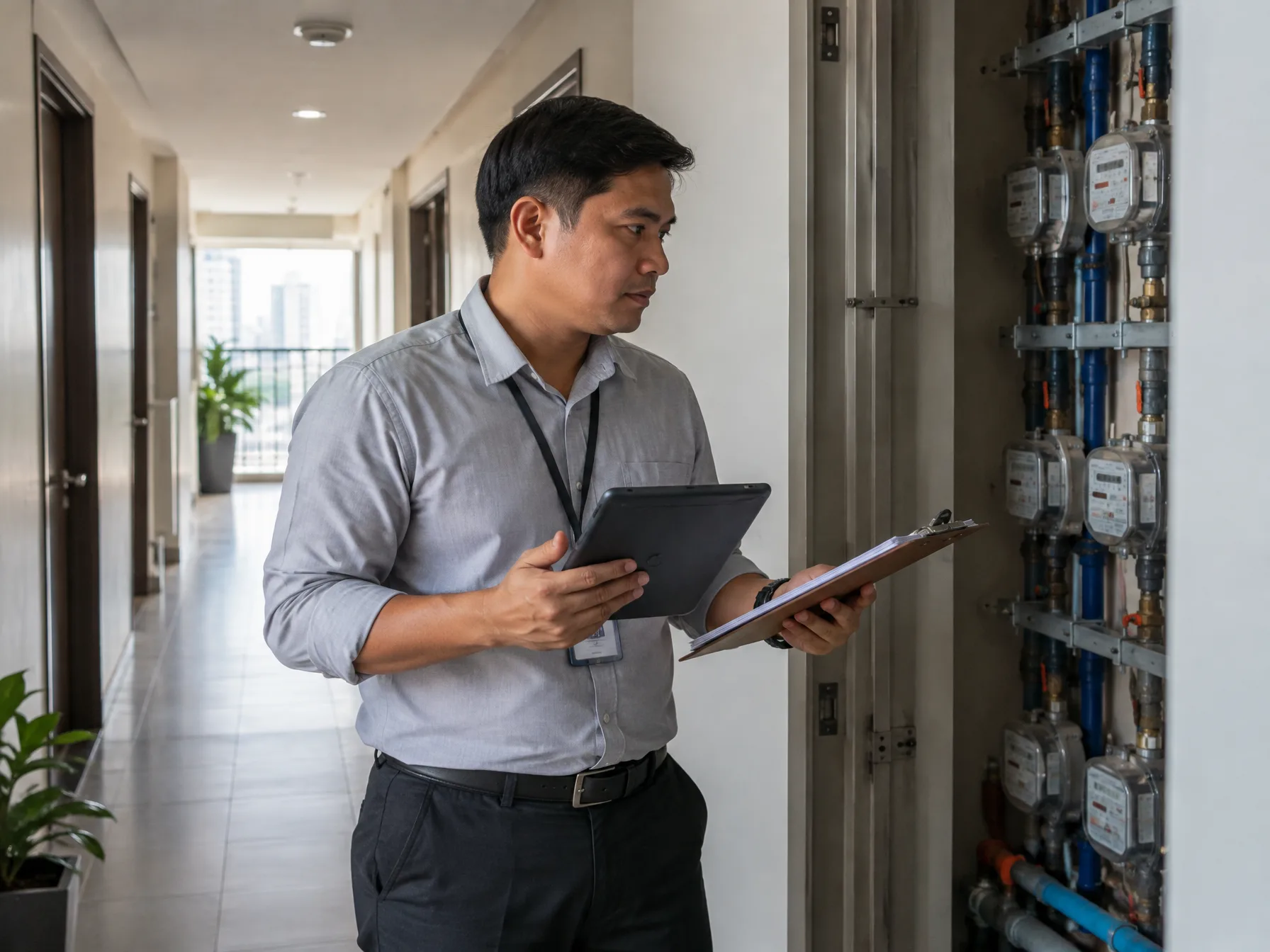
The core principle. Rent you collect for an owner is not your income. It is money you owe the owner (“Due to Owners”). Your income is the management or leasing fee. Keep a separate ledger per owner, ideally a separate bank account, and a monthly statement. Counting the full rent as your own revenue inflates your gross sales, can push you over the ₱3M VAT line early, and creates a tax problem on money that was never yours.
Unsettled point: whether collections should run on the owner’s invoice or the manager’s (agent versus principal treatment) is not settled in our sources, and we found no BIR ruling. Get this confirmed in writing with your RDO or a CPA before you scale. The 2307 on the tenant’s rent belongs to the owner as lessor; pass it on and keep a copy.
| # | Entry | Dr (₱) | Cr (₱) |
|---|---|---|---|
| P1 | Cash in Bank (rent collected for the owner) | 30,000.00 | |
| Due to Owners | 30,000.00 | ||
| P2 | Due to Owners (10% fee) | 3,000.00 | |
| Management Fee Income | 3,000.00 | ||
| P3 | Due to Owners (repair paid for the owner) | 2,000.00 | |
| Cash in Bank | 2,000.00 | ||
| P4 | Due to Owners (remittance of the balance) | 25,000.00 | |
| Cash in Bank | 25,000.00 | ||
| P5 | Taxes and Licenses (3% of the 3,000 fee) | 90.00 | |
| Percentage Tax Payable | 90.00 | ||
| Totals | 60,090.00 | 60,090.00 | |
Check: debits 30,000 + 3,000 + 2,000 + 25,000 + 90 = 60,090; credits 30,000 + 3,000 + 2,000 + 25,000 + 90 = 60,090. The owner account: 30,000 in, less 3,000 fee, less 2,000 repair, less 25,000 remitted, leaves ₱0.00 due, which is what a clean monthly close looks like.
Collection and administration fees can be treated as intermediary income. In the old case J.M. Tuason & Co., an 8% “administration fee” was held to be brokerage-type income for tax purposes (the old broker’s tax no longer exists, so only the principle matters).[30] Common mistakes: commingled cash, full rent booked as revenue, 2307s not passed to owners, and no owner statements.
9.5 Property services and maintenance
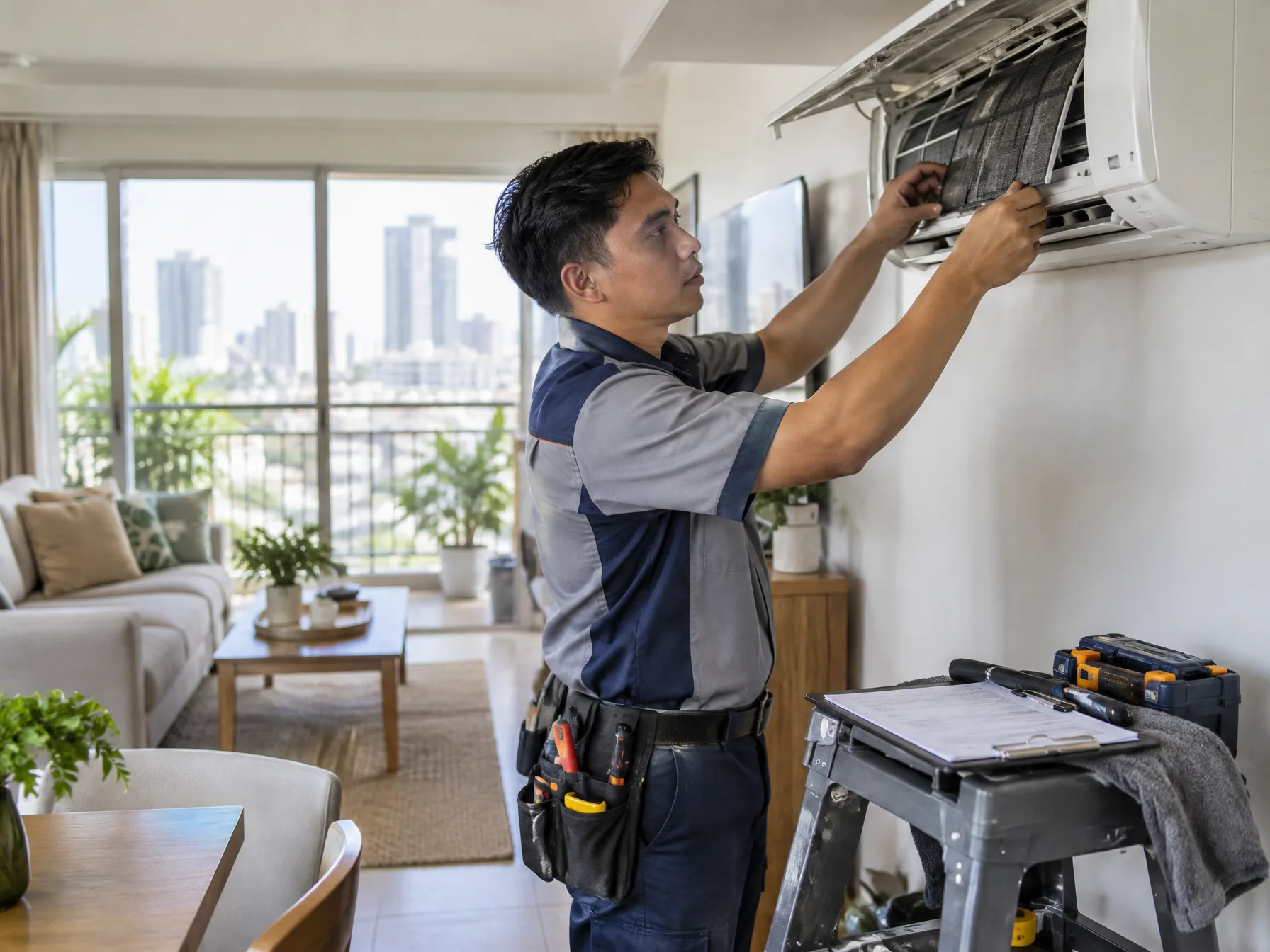
Tax picture. Service income under ₱3M: 3% percentage tax or the 8% option; above, VAT. Corporate clients and top withholding agents will withhold and issue a 2307; contractors are commonly withheld at 2%, but the exact rate for each activity was not confirmed in our research, so use the rate printed on your certificate.[20] Record materials and labor separately on the invoice and in the ledger. Materials bought for a job go to a direct-cost account, not a general expense. Whether withholding applies to the whole billing depends on the contract wording.
If you have helpers, you also become an employer: monthly 1601-C, annual 1604-C, a 2316 for each employee, and SSS, PhilHealth and Pag-IBIG remittances. Check the current contribution schedules.
| # | Entry | Dr (₱) | Cr (₱) |
|---|---|---|---|
| S1 | Cash in Bank (12,000 less 2% EWT of 240) | 11,760.00 | |
| Creditable Withholding Tax (2307) | 240.00 | ||
| Service / Labor Income | 8,000.00 | ||
| Materials Income | 4,000.00 | ||
| S2 | Direct Costs (materials bought for the job) | 3,000.00 | |
| Cash on Hand | 3,000.00 | ||
| S3 | Salaries and Wages (helper) | 1,500.00 | |
| Cash on Hand | 1,500.00 | ||
| S4 | Furniture and Equipment (tools) | 6,000.00 | |
| Accounts Payable | 6,000.00 | ||
| S5 | Taxes and Licenses (3% of 12,000) | 360.00 | |
| Percentage Tax Payable | 360.00 | ||
| Totals | 22,860.00 | 22,860.00 | |
Check: debits 11,760 + 240 + 3,000 + 1,500 + 6,000 + 360 = 22,860; credits 8,000 + 4,000 + 3,000 + 1,500 + 6,000 + 360 = 22,860. In S1, 11,760 + 240 = 12,000 = 8,000 + 4,000.
Common mistakes: paying workers in cash with no records (an undeclared payroll cost is likely to be disallowed), losing 2307s, no invoice per job, mixing personal tools and vehicle with business ones, and undocumented “labor only” subcontractor payments that cannot be deducted without proper documents.
10. Filing it with the BIR: forms and deadlines
Your journal and ledger feed your returns. Gross sales or receipts from the ledger go to the percentage-tax or VAT return; quarterly gross receipts and expenses go to the income tax return; withholding you did and did not suffer go to the withholding returns and credits.
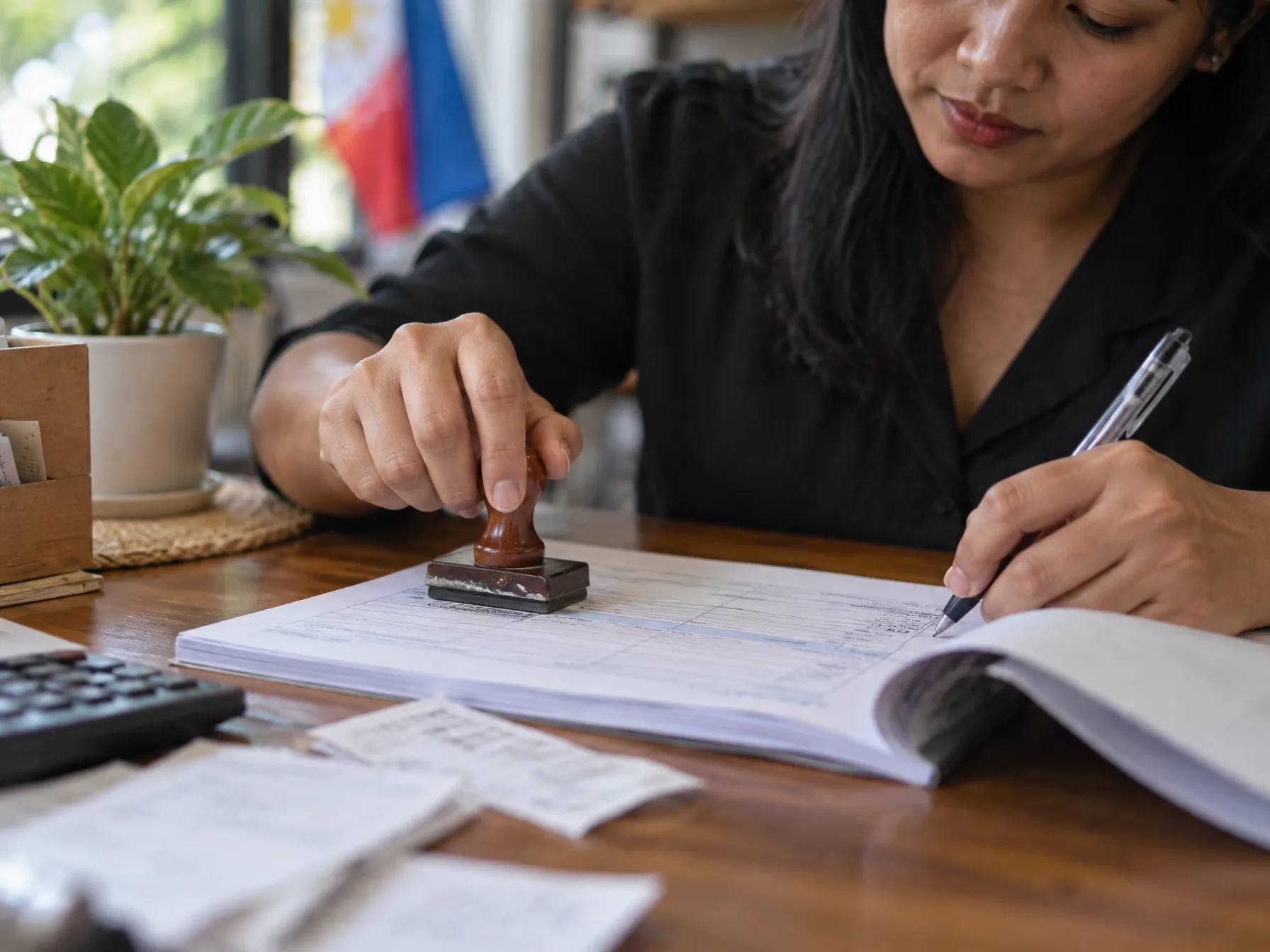
| Form | What it is | Who files it |
|---|---|---|
| 1901 / 1903 / 1905 | Registration (individuals; corporations; updates), now through ORUS | Everyone, once[3][5] |
| 2551Q | Quarterly percentage tax (3%) | Non-VAT, not on the 8% option |
| 2550Q | Quarterly VAT return (EOPT removed the monthly 2550M) | VAT-registered[3] |
| 1701Q / 1702Q | Quarterly income tax: individuals / corporations | Most businesses |
| 1701 / 1701A / 1702 | Annual income tax: individuals with graduated rates; individuals on 8% or OSD only; corporations | Most businesses |
| 1701-MS | New simplified annual return for micro and small individuals (RMC 20-2026), usable whichever form is on the COR | Micro and small individuals[12] |
| 2307 | Certificate of creditable tax withheld, issued to you by a client; you issue it when you withhold from others | Withholding agents issue; payees keep |
| 1601-EQ / 0619-E | Quarterly return and monthly remittance of expanded withholding tax | If you withhold from suppliers or agents |
| 1601-C / 1604-C / 2316 | Compensation withholding (monthly, annual) and certificate to employees | If you have employees |
| 0605 | General payment form (for example, certain fees) | As needed |
| Return | When due |
|---|---|
| 1701Q (individuals) | Q1: May 15; Q2: August 15; Q3: November 15 (the fourth quarter is covered by the annual return) |
| Annual 1701 / 1701A | April 15 of the following year |
| 2551Q / 2550Q | 25th day after quarter-end: April 25, July 25, October 25, January 25 |
| 1601-EQ | Last day of the month after the quarter |
| 0619-E | Monthly for the first two months of each quarter |
| 1702-Q (corporations) | Within 60 days after quarter-end |
| Books registration | Loose-leaf within 15 days after year-end, computerized within 30 days; ORUS circulars have extended these in practice (31 January and 17 February 2026 for TY2025)[5][7] |
| AITR attachments (TY2025) | Submitted through eAFS; deadline later clarified as 15 May 2026[12] |
| E-invoicing (covered taxpayers only) | 31 December 2026[34] |
When a due date falls on a weekend or holiday, filing is usually allowed on the next working day, but the BIR sometimes issues specific advisories, so check before the last day. The calendar below lists deadlines by taxpayer type for 2026 and 2027, shows days remaining from today, and lets you download an .ics file for your phone.
Some of the deadline dates above (1601-EQ, 0619-E and 1702-Q in particular) reflect standard BIR practice rather than a document we read for this guide. Treat the calendar as a reminder tool and confirm each date on the BIR website.

11. Computing your tax: 8%, graduated or OSD
Individuals have three ways to compute income tax. The tax types they pair with differ.
- 8% option: for individuals with gross sales and non-operating income up to ₱3M who are not VAT-registered. It is 8% of gross above ₱250,000 and replaces both graduated income tax and the 3% percentage tax. It is not for mixed-income earners (employees with a side business), who are taxed on compensation separately. Elect it on the first-quarter return; it applies for the year.[2][11]
- Graduated rates with itemized deductions: tax on net income (revenue less documented expenses), plus 3% percentage tax on gross.
- Graduated rates with the 40% optional standard deduction (OSD): deduct 40% of gross instead of itemizing, plus 3% percentage tax.
| Annual taxable income | Tax |
|---|---|
| Up to ₱250,000 | 0 |
| Over ₱250,000 to ₱400,000 | 15% of the excess over ₱250,000 |
| Over ₱400,000 to ₱800,000 | ₱22,500 + 20% of the excess over ₱400,000 |
| Over ₱800,000 to ₱2,000,000 | ₱102,500 + 25% of the excess over ₱800,000 |
| Over ₱2,000,000 to ₱8,000,000 | ₱402,500 + 30% of the excess over ₱2,000,000 |
| Over ₱8,000,000 | ₱2,202,500 + 35% of the excess over ₱8,000,000 |
Worked example: same gross, different expenses
A non-VAT sole proprietor has gross receipts of ₱1,200,000 for the year and no mixed income. The percentage tax is 3% of gross = ₱36,000 under the two graduated methods, and nil under the 8% option. Simplification: we ignore any deductibility of the percentage tax and quarterly credits.
| Method | Taxable base | Income tax | Percentage tax | Total |
|---|---|---|---|---|
| 8% option | 1,200,000 − 250,000 = 950,000 | 76,000.00 | 0.00 | 76,000.00 |
| Itemized | 1,200,000 − 500,000 = 700,000 | 82,500.00 | 36,000.00 | 118,500.00 |
| OSD 40% | 1,200,000 − 480,000 = 720,000 | 86,500.00 | 36,000.00 | 122,500.00 |
Working: 8% × 950,000 = 76,000. Itemized: 22,500 + 20% × (700,000 − 400,000) = 22,500 + 60,000 = 82,500. OSD: 22,500 + 20% × (720,000 − 400,000) = 22,500 + 64,000 = 86,500. Here the 8% option wins.
| Method | Taxable base | Income tax | Percentage tax | Total |
|---|---|---|---|---|
| 8% option | 950,000 | 76,000.00 | 0.00 | 76,000.00 |
| Itemized | 1,200,000 − 900,000 = 300,000 | 7,500.00 | 36,000.00 | 43,500.00 |
| OSD 40% | 720,000 | 86,500.00 | 36,000.00 | 122,500.00 |
Working: itemized 15% × (300,000 − 250,000) = 7,500. When expenses are heavy and documented, itemizing wins. That is why the ledger matters: itemized deductions only count when supported by invoices and records.
Your 2307 credits. Certificates received reduce what you pay. If the 8% tax above is ₱76,000 and your clients withheld ₱30,000 over the year, you owe about ₱46,000 after credits (before quarterly payments already made). A credit is only as good as the certificate behind it. Without the 2307, you cannot claim it.
VAT warning: when gross sales pass ₱3M, 8% and percentage tax are no longer available; you register for VAT, which also triggers the CPA-audit requirement. Watch your cumulative quarterly gross.[2]
Try your own numbers in the comparison tool.

12. Real cases and illustrative stories
12.1 Publicly reported cases and enforcement
These are reported cases and enforcement actions that we could verify from public sources. We did not find a sourced case of a named landlord, Airbnb host or property manager whose books went missing, and we did not invent one. Where we only read a summary, we say so.
| Case | What happened | Lesson for your books |
|---|---|---|
| People v. Mendez, G.R. Nos. 208310-11 and 208662 (March 2023) | A physician-businessman did not file a 2002 return and filed an incomplete 2003 return. After three notices went unanswered, the BIR used third-party data to reconstruct income. The Supreme Court upheld conviction under Section 255 and held a formal assessment is not a precondition to criminal prosecution.[26] | Missing records, then best evidence obtainable, then a criminal case. We read only a summary of the decision. |
| CIR v. Hantex Trading Co., G.R. No. 136975 (2005) | The BIR assessed deficiency taxes based on photocopies from an informer. The Supreme Court remanded: the best-evidence rule needs authentic, admissible evidence, not mere photocopies.[27] | The BIR’s power is real, but not unlimited. Final outcome after remand: not read. |
| CIR v. Elric Auxiliary Services / Sacred Heart Gas Station (Supreme Court, 19 Feb 2026) | A closure order after surveillance was void because the closure power in Section 115 cannot bypass the valid-assessment requirements of Section 228.[28] | Due process applies to closures. It is not a licence to skip books. |
| Gutierrez v. CIR, G.R. No. L-19537 (1965) | An individual lessor’s deductions (depreciation, expenses) were partly disallowed as personal or capital; the Court modified the assessment and allowed some business expenses.[29] | A lessor’s deductions need proof. An old case, but the only lessor-specific decision we could read in full. |
| J.M. Tuason & Co. v. Collector, G.R. No. L-11530 (1960) | An 8% “administration fee” for collecting and managing was held taxable as brokerage-type income.[30] | Management and collection fees can be treated like intermediary income. Old tax regime; principle only. We read a summary. |
| Collector v. Tan Eng Hong, G.R. No. L-16893 (1966) | A supplier was assessed as a broker; the Court held he was an importer because he contracted in his own name and bore liability, and cancelled the assessment.[31] | Whether you act as agent or principal in the contract decides how your income is characterised. |
| BIR Region 7 (Cebu) Airbnb checks (reported October 2024) | The regional director said condos were being converted to unregistered Airbnbs, coordination with condo management was planned, and about 40% of roughly 100 sampled units were registered. A first-offense fine figure appeared in one secondary report only and is unconfirmed.[25] | Condo management companies know who is hosting. |
| Nationwide Oplan Kandado (reported 1 July 2026) | The BIR reported 419 cases with ₱742.1M in potential tax exposure and 132 closure orders, stressing “assistance first”; many avoided closure by registering, filing and paying. Online businesses are now covered.[32] | Compliance, not hiding, is the way out. |
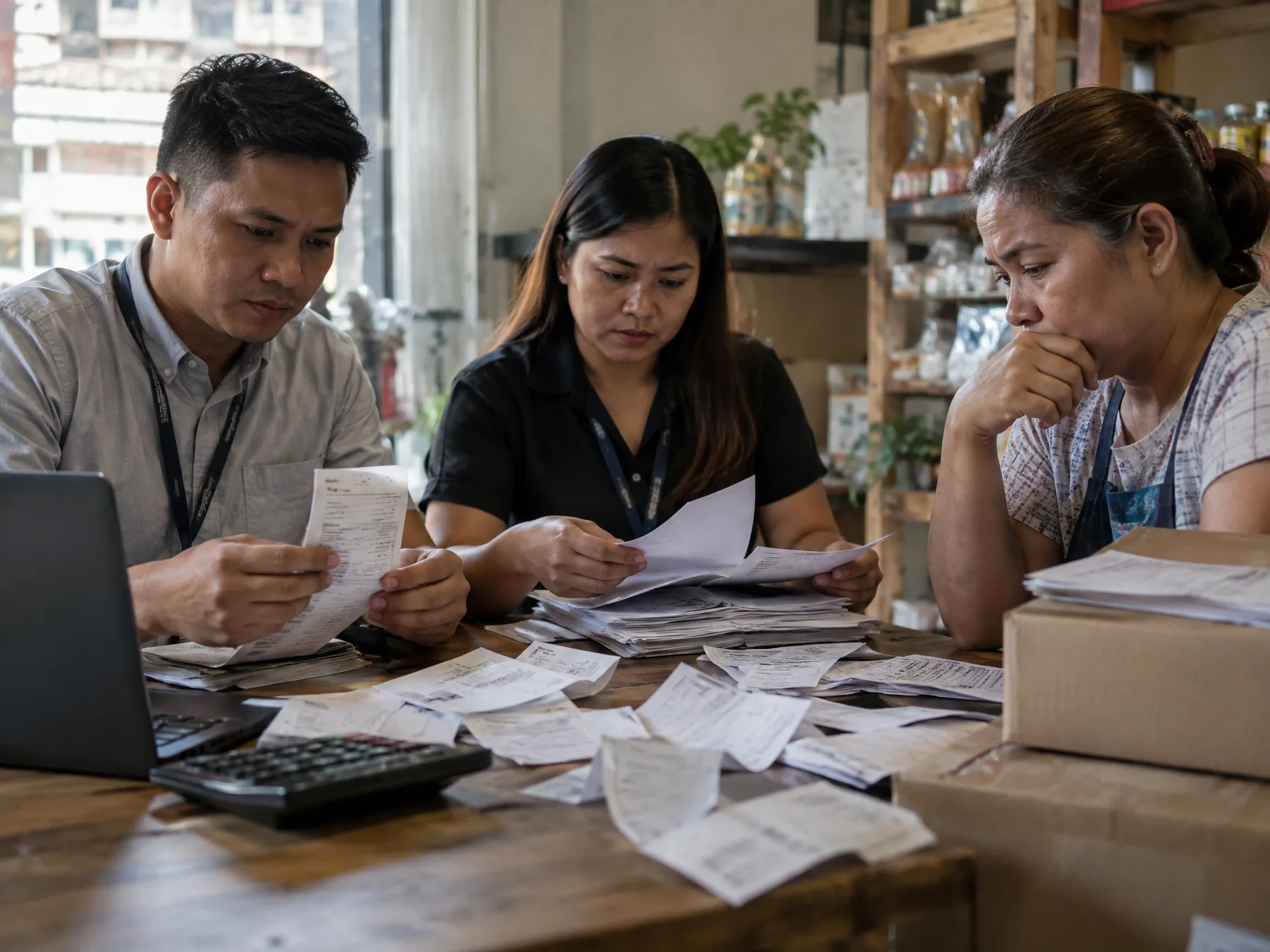
The statute behind the first case, Section 6(B), lets the Commissioner assess on the “best evidence obtainable” where returns are missing, false or incomplete, and the assessment is presumed correct, which shifts the burden to you.[21] Poor accounting records alone are not fraud (willfulness must be proven), but they weaken your ability to answer.[22]
12.2 Five illustrative composite stories
You asked for examples from people in your position. We cannot publish private clients’ stories, so the five below are composites built from common patterns. None describes a real person, and none is a testimonial. Amounts are round numbers for teaching.
Composite case (illustrative)
The Airbnb host with two views of the same income
A condo owner lists a unit on a booking platform. Her bank shows payouts of ₱9,700 per booking; she assumed that was her income. At year-end she tried to claim cleaning, condo dues and the platform fee, but the platform fee was never recorded because it was netted from the payout. Her gross was understated by every fee, her percentage tax was calculated on the wrong base, and she could not reconcile payouts to bookings. The fix: record gross booking income and the fee separately (entry A1 above), reconcile each payout statement to the bank, and keep the statements.
Composite case (illustrative)
The landlord who counted a deposit as income
A landlord with three apartments received two months’ deposit from each new tenant and booked all of it as rental income in the month received. Her income looked higher than her actual rent, and when a tenant left and she refunded the deposit, nothing in her books explained where the cash went. The fix: deposits go to a liability account (entry L3) and come out when applied or refunded; advance rent is a separate question to ask the RDO. She also started filing each corporate tenant’s 2307 by quarter.
Composite case (illustrative)
The broker with a stack of lost certificates
A licensed salesperson received commissions net of withholding and recorded only the cash received. At return time she had four unreported 2307s, which meant she was overpaying income tax because she could not claim the credits, and her commission income was understated. The fix: record gross commission, the withholding as a creditable asset (entry B1), and chase the developer’s accounting for every missing certificate before the quarter closes.
Composite case (illustrative)
The property manager who mixed funds
A small property management firm collected rent for six owners into one account and booked it all as revenue. Its gross receipts looked like ₱2.9M, close to the VAT line, but its true fee income was a fraction of that. An owner asked for a statement and it took the firm two weeks to reconstruct. The fix: a Due to Owners account with a ledger per owner, a monthly statement, and a separate bank account. The firm also asked its RDO for written guidance on invoicing, since agent-versus-principal treatment is not settled in public sources.
Composite case (illustrative)
The repairs contractor with cash-only workers
A handyman billed a lump sum and paid helpers in cash with no list. Under a client’s review, he could not show who was paid, how much, or for what. He lost deductions for undocumented labor and could not show how the 2% withholding on an invoice related to the job. The fix: an invoice per job showing labor and materials separately (entry S1), a simple payroll list signed by workers, and receipts from suppliers.
The pattern across all five: nothing in these stories required fancy software. Each problem came from a missing habit: recording gross, separating other people’s money from yours, and keeping the paper that supports a number.
13. What the BIR is planning, and what is not confirmed
As of 9 October 2026, the digital direction is clear but the details are uneven. BIR Commissioner Charlito Martin R. Mendoza’s 2026 agenda, called DARES, pairs digital transformation and audit reform with “assistance first to comply, enforcement only when necessary”.[40] The table separates what is fixed in writing from what is only announced or rumoured.
| Item | Status | Details |
|---|---|---|
| E-invoicing for covered taxpayers | Confirmed | Deadline 31 December 2026 (RR 26-2025, RMC 98-2026). Covers small, medium and large taxpayers engaged in e-commerce, the Large Taxpayers Service, large EOPT taxpayers, and users of computerized accounting systems or invoicing software. Micro taxpayers are exempt; others may adopt voluntarily with a Permit to Issue.[33][34] |
| What counts as an e-invoice | Confirmed | Invoices made in Word, Excel or Google Docs are not valid e-invoices; system invoices that are only printed do not qualify. Corrections are by credit note or new invoice; issued e-invoices cannot be edited.[34] |
| Books registration via ORUS | Confirmed | Online registration with QR code; RMC 004-2026 extended TY2025 deadlines.[5][7] |
| Simplified annual return 1701-MS | Confirmed | For micro and small individuals (RMC 20-2026).[12] |
| One-time abatement for micro taxpayers | Confirmed, open | RR 4-2026: gross sales up to ₱3M and covered taxes and penalties up to ₱80,000 per taxable year, for cases existing as of 31 December 2025; flat ₱5,000 abatement fee; apply at the RDO until 31 December 2026 unless extended.[13] |
| E-sales reporting (Section 237-A) | Law exists, no date | Applies only upon separate BIR implementing rules; a Permit to Transmit applies only on later notice. As of today no date has been issued.[34][39] |
| Electronic invoicing service providers | Announced, not seen | A separate BIR issuance on service providers was expected; we have not seen it. |
| Taxpayer Portal regional rollout | Announced, not verified | Reported for around October 2026; details unconfirmed.[40] |
| Abolishing manual or loose-leaf books | Not confirmed | We found no 2026 BIR rule doing this. |
| Mandatory submission of your books to the BIR | Not confirmed | We found none and no specific pending bill. |
| E-invoicing extended to micro taxpayers | Not confirmed | No evidence; speculation only. |
| General tax amnesty | None currently open | Estate tax amnesty expired 14 June 2025; extension bills' status is unverified. RR 4-2026 is the relevant relief for micro taxpayers. |
The software trap. RMC 98-2026 lists taxpayers using computerized accounting systems or invoicing software among the covered groups, with micro taxpayers excepted. If you plan to move your books to accounting software, read the circular’s coverage carefully or ask your RDO whether it affects you before you register a computerized book.[34] That reading is ours; verify the nuance.
Also noted: a 12% VAT on non-resident digital service providers has applied since 2 June 2025 (RA 12023). For hosts and managers this mostly affects platform and software fees, not the format of your books.[45] And the EOPT law requires the BIR to publish a digitalization roadmap that prioritises micro and small taxpayers; we could not find that document, so its milestones are unverified.[3]
14. Penalties: what a gap in your books can cost
Penalties come in three layers: civil (surcharge and interest added to the tax), compromise (a negotiated amount in lieu of prosecution), and criminal (fine and imprisonment). EOPT cut the first two for micro and small taxpayers, those with gross sales below ₱20M.[3][38]
| Violation | Legal basis | Penalty | Confidence |
|---|---|---|---|
| Late filing or payment; unpaid deficiency | NIRC Sec. 248(A), as amended by RA 11976 | Surcharge 25%; 10% for micro and small taxpayers | Statute read |
| Willful neglect to file; false or fraudulent return | Sec. 248(B) | Surcharge 50% (all sizes). Under-declaration of more than 30% is prima facie a false return | Statute read |
| Interest on unpaid tax | Sec. 249 as amended by TRAIN; RA 11976 Sec. 45 | 12% a year; 6% for micro and small | 12% from secondary summaries[41]; the 50% cut is in the statute |
| Failure to file information returns or keep a record (not willful) | Sec. 250 | ₱1,000 per failure, up to ₱25,000 a year; ₱500 per failure for micro and small | Statute read; yearly cap for micro and small is secondary |
| Withholding agent fails to withhold or remit | Sec. 251 | Penalty equal to the tax not withheld or remitted, on conviction | Statute read |
| Willful failure to pay, file, keep records or supply information | Sec. 255 | Fine of at least ₱10,000 and imprisonment of 1 to 10 years | Statute read[1] |
| Corporation committing the offense | Sec. 256 | Fine of ₱50,000 to ₱100,000 on the entity | Statute read |
| Failure or refusal to issue a receipt or invoice; incomplete invoice; unauthorised printing | Sec. 264 | Fine of ₱1,000 to ₱50,000 and imprisonment of 2 to 4 years, per act | Statute read; not amended by RA 11976 |
| Other violations with no specific penalty (for example, unregistered books) | Sec. 275 | Fine up to ₱1,000 or up to 6 months in jail, or both | Original text; later amendments unverified |
| Closure of establishment | Sec. 115 as amended by RA 11976 | Suspension for at least 5 days, lifted on compliance. Triggers shown for VAT-registered persons include no invoices, no VAT return, and understating sales by 30% or more | Triggers read; 5-day minimum is from the original text; application to non-VAT sole proprietors is unverified |
| No or unreliable books | Sec. 6(B) | Assessment on best evidence obtainable, presumed correct | Statute read |
| Assessment window | Secs. 203, 222 | 3 years from the filing deadline or actual filing; 10 years from discovery for fraud or no return | Statute read |
Compromise penalties (secondary-source summary)
A compromise is an amount the BIR may suggest in place of prosecution. It is not a fine, and refusing it can mean referral for criminal action; fraud cases are never compromised.[35] The schedule in RMO 7-2015 is still described as the controlling reference, but we could not extract its annex table, so the figures below come from secondary summaries and should be checked with the RDO.[35][36][37]
| Violation | Compromise (secondary source) | Micro or small |
|---|---|---|
| Failure to issue receipt or invoice | The higher of 1x the value or ₱20,000, with a ceiling of ₱50,000 per act; none on a second or third offense | At least 50% off |
| Failure to register or keep books | ₱10,000, ceiling ₱50,000, separate for head office and each branch | At least 50% off for Secs. 113, 237 and 238 violations by statute[3]; for books, check |
| Failure to submit SLSP or alphalist | ₱1,000 per failure, up to ₱25,000 per category per year | Check with RDO |
Three worked examples
Assumptions: simple interest on the unpaid tax from the day after the due date (days over 365); surcharge on the tax due. Whether interest also runs on the surcharge is unverified.
| Micro / small | Medium / large | |
|---|---|---|
| Tax | 9,000.00 | 9,000.00 |
| Surcharge (10% / 25%) | 900.00 | 2,250.00 |
| Interest (6% / 12% × 30/365) | 44.38 | 88.77 |
| Total | 9,944.38 | 11,338.77 |
| Micro / small | Medium / large | |
|---|---|---|
| Tax | 20,000.00 | 20,000.00 |
| Surcharge (10% / 25%) | 2,000.00 | 5,000.00 |
| Interest (6% / 12% × 60/365) | 197.26 | 394.52 |
| Total | 22,197.26 | 25,394.52 |
If the BIR proves willful neglect or fraud, the surcharge is 50%, which would be ₱10,000 in Example 2. If no tax is due, there is no surcharge or interest, but a compromise for late filing can still be suggested.
Example 3: no invoice on a ₱5,000 service (micro, non-VAT). The BIR can assess the unreported tax plus surcharge and interest. The compromise under RMO 7-2015 would be the higher of ₱20,000 or 1x ₱5,000, which is ₱20,000; micro and small taxpayers get at least 50% off, so about ₱10,000 (exact rounding unverified). If it is not compromised, Section 264 allows a fine of ₱1,000 to ₱50,000 and 2 to 4 years’ imprisonment per act. Closure under Section 115 is expressly shown for VAT-registered persons; for non-VAT micro businesses it is unverified.
No one wants to be in the “criminal” column. Note that the sources describe willful acts, and the people in the reported cases above had ignored notices or never filed. Honest mistakes that you fix early and pay generally land in the civil layer, which is why filing late is better than not filing.
Use the calculator to estimate your own surcharge, interest and compromise range.
15. Self-check: are your books ready?
Fifteen yes/no questions, one minute. The tool saves your answers in your browser only, shows a score, and lists your top three fixes.
16. Summary, recommendation and how to do this efficiently
Bottom line. Keep a journal and ledger from your first day. Register the books through ORUS. Record gross income, not net payouts. Keep a document for every entry. Close the books monthly. Choose your tax option with numbers, not guesses. Keep the records for at least five years, preferably ten.
Software, spreadsheet or bookkeeper?
| Option | Good for | Watch out for |
|---|---|---|
| Bound manual books or loose-leaf | Very low volume; people who like paper | Slow reconciliation; registration steps and the Permit to Use[8] |
| Spreadsheet as computerized book | Most micro hosts and landlords; cheap and flexible | Overwriting past months; no audit trail; must be registered as computerized books. Excel is not a valid e-invoice generator[34] |
| Accounting software | Growing volume, VAT, multiple properties | May place you among covered e-invoicing users unless micro; confirm first[34] |
| Part-time bookkeeper or CPA | Anyone near ₱3M, anyone with employees, anyone who dislikes bookkeeping | Still keep your own documents and bank access; you remain responsible for the return |
A 30-minute monthly routine
- 5 minutes: download bank, GCash and platform statements; confirm every payout matches a booking or invoice.
- 10 minutes: enter the month’s transactions in the journal; post to the ledger.
- 5 minutes: file receipts, bills and 2307s in dated folders; update the 2307 schedule.
- 5 minutes: prepare the trial balance and check that it balances; correct anything off.
- 5 minutes: estimate the quarter’s percentage tax or VAT, and look at the next deadline. Calendar reminders help.
Tips for effectiveness and efficiency
- Use a separate bank account and GCash wallet for the business.
- Photograph every receipt on the day you get it.
- Reconcile before you file, not after the BIR writes.
- Record the gross, always: the fee, the withholding and the deposit are separate lines.
- Back up your computerized books weekly; computerized books must be kept electronically.[3]
- Book a one-hour annual review with a CPA for the tax option, depreciation and the VAT line.
- If you have old unfiled periods and are a micro taxpayer, ask about RR 4-2026 before 31 December 2026.[13]
Need help setting up? Write to manilaopenhouse@gmail.com with your business type and approximate monthly volume. We can point you to the right checklist, but for a binding answer on your own case, take it to your RDO or a CPA.
Frequently asked questions
1. Do I need a CPA to keep my books?
No, for the keeping itself. A CPA is required to audit your books when gross annual sales, earnings, receipts or output exceed ₱3M, and the income tax return then carries an Account Information Form.[2] Below that, many owners keep their own books and consult a CPA once a year.
2. Can I use Excel instead of a bound book?
Yes, as computerized books, provided they are registered through ORUS and kept electronically. RMC 65-2025 is reported to allow a choice among manual, loose-leaf and computerized for new registrants.[6][7] Excel is not a valid e-invoice maker for covered taxpayers.[34]
3. I only rent out one condo. Do I still need all this?
If you pay internal revenue taxes on the rent, Section 232 applies and we found no size exemption.[1] Your records can be small, but they should be complete and registered.
4. Does choosing the 8% option mean no books?
No. It replaces graduated income tax and percentage tax only. You still need records to show your gross receipts. A search summary suggests 8% filers need not attach financial statements to the annual return; confirm that with your RDO.
5. How long do I keep invoices and ledgers?
At least five years under EOPT, counted from the day after the filing deadline (or the late filing date). We suggest ten years because of the ten-year window for unfiled or fraudulent returns.[1][3]
6. Do official receipts still matter?
Since EOPT the invoice is the primary document for sales and services; official receipts are supplementary proof of payment.[4][43] The cut-off dates for unused receipts were not confirmed in our sources, so ask your RDO about old stock.
7. Is my Airbnb income withheld on already?
RR 16-2023 covers platforms that book lodging, with sellers at or below ₱500,000 of annual remittances excluded.[14] We cannot confirm that a specific platform withholds and issues a 2307 to hosts in practice. Do not assume; check your payout statements.
8. Must I e-invoice by 31 December 2026?
Micro taxpayers are exempt. Small, medium and large e-commerce sellers, Large Taxpayers Service accounts, large EOPT taxpayers and users of computerized accounting or invoicing software are covered. Others may adopt voluntarily.[34] Ask your RDO about your coverage.
9. What if I have not filed for years?
File as soon as possible: late-but-honest filing sits in the civil layer. If you are micro (gross sales up to ₱3M and covered liabilities up to ₱80,000 a year), ask your RDO about the RR 4-2026 abatement, open until 31 December 2026 unless extended.[13] Do not ignore BIR notices. In the reported criminal case, three unanswered notices preceded prosecution.[26]
10. Is this guide a substitute for professional advice?
No. It is a general explanation based on public sources, written on 9 October 2026. Some points are marked unconfirmed because we could not verify them. Confirm with your RDO or a CPA before you rely on a rule for your own filing.
Sources
Several sources are law-firm or news summaries rather than the BIR’s own text; where we read the primary text, it is the statute or the BIR PDF. Items marked “search snippet” in our research were not fully opened.
- Lawphil, RA 8424 (NIRC 1997): Secs 6, 115, 203, 222, 232–235, 248–258, 264, 275
- Lawphil, RA 10963 (TRAIN): Sec 232 CPA-audit proviso, VAT threshold
- Lawphil, RA 11976 (EOPT Act): Secs 235–238, 41, 45
- Grant Thornton PH, EOPT: preservation of books and registration changes (RR 7-2024)
- Grant Thornton PH, online registration of books via ORUS
- SunStar, new way of registering books of accounts via ORUS (RMC 3-2023; RMC 65-2025 summary)
- CloudCFO, RMC 004-2026 books-of-accounts deadline extension
- Aurea Da Law, loose-leaf books binding and registration, 2026
- Manila Bulletin, BIR scraps P500 annual registration fee (9 Jan 2024)
- PwC Philippines Tax Alert 20, RR 8-2024 taxpayer classification
- Batasnatin, 3% percentage tax on non-VAT persons (Sec 116)
- Grant Thornton PH, annual ITR filing guidelines for CY2025 (RMC 20-2026; attachment deadline clarified in RMC 39-2026)
- Grant Thornton PH, RR 4-2026 one-time abatement for micro taxpayers
- BIR, Revenue Regulations 16-2023 (official PDF)
- Grant Thornton PH, online sellers subject to 1% withholding
- Respicio & Co., 5% expanded withholding tax on commercial lease
- Respicio & Co., BIR obligations of residential lessors
- Foreclosure Philippines, exemptions from VAT
- Respicio & Co., withholding tax and VAT on real estate commissions
- Grant Thornton PH, withholding taxes made easier (RR 11-2018)
- Batasnatin, best evidence obtainable rule (Sec 6(B))
- Aurea Da Law, can poor accounting records increase tax risk
- Airbnb Newsroom, working with DOT on safe tourism recovery in the Philippines
- Jur.ph, DOT Progressive Accreditation System guidelines (MC 2018-03)
- The Freeman / Philstar, BIR 7 stepping up crackdown on unregistered Airbnb units (10 Oct 2024)
- Chanrobles, People v. Mendez, G.R. Nos. 208310-11 and 208662 (March 2023)
- Batasnatin, CIR v. Hantex Trading Co., G.R. No. 136975 (digest)
- Lawphil, CIR and Aranas v. Elric Auxiliary Services Corp., G.R. No. 226945 (19 Feb 2026)
- Lawphil, Gutierrez v. CIR, G.R. No. L-19537 (1965)
- Batas.org, J.M. Tuason & Co. v. Collector of Internal Revenue (summary)
- Lawyerly, Collector of Internal Revenue v. Tan Eng Hong, G.R. No. L-16893
- Global Law Experts, BIR compliance-first Oplan Kandado (419 cases)
- BIR press release, 23 Sep 2026, electronic invoicing rules ahead of the 31 December compliance deadline
- BIR, Revenue Memorandum Circular 98-2026 (22 Sep 2026), electronic invoice policies
- BIR RMO 7-2015 order text (via Grant Thornton PH)
- Grant Thornton PH, penalties for non-submission of SLSPs, alphalists and other violations (2015)
- Respicio & Co., compromise penalty in Philippine tax law (2025 update)
- Grant Thornton PH, EOPT: revised taxpayer classification and reduced penalties (RR 6-2024, RR 8-2024)
- Grant Thornton PH, CREATE MORE: mandatory e-invoicing and e-sales reporting
- Morning Standard, Mendoza’s DARES (27 Sep 2026)
- Digest.ph, RR 21-2018 on Sec 249 interest
- Respicio & Co., bookkeeping requirements for small stores
- Ocampo & Suralvo, registration and invoicing requirements under EOPT (RR 7-2024)
- Forvis Mazars, RMC 69-2023 (percentage tax back to 3%)
- Forvis Mazars, RR 3-2025 on VAT on digital services (RA 12023)
- Alas Oplas & Co., no more annual registration fee
Photos











Related articles

How Much Real Estate Loan Can You Get? Income, DTI, Down Payment, Banks vs Pag-IBIG vs Business Loans (Philippines 2026)
How big a loan can you really get for a house, a condo or a lot? Lenders do not guess. They look at three numbers: your documented income, how much of it your…
 ▶ Video
 Airbnb or Long-Term Lease in the Philippines, 2026: Is Short-Term Rental Really "Passive Income," and Where It Actually Pays — BGC to Siargao
Every few weeks, someone on r/phinvest posts the same question in a different unit: "I own a condo — should I rent it out long-term, or put it on Airbnb?" It…

Solar Land in the Philippines, 2026: Where the Solar Farms Are, Which Property Types Can Legally Host Them, and What to Check Before You Buy a Lot for an Energy Business
The Philippines added 899 MW of solar in 2025 alone — pushing cumulative installed capacity to 3,892 MW — and Meralco's Terra Solar project synchronised its…