

Starting 19 October 2026 you can have a PDF notarized online or in person through Supreme Court-accredited platforms — Twala, QLegal and NotarizeIT — before any of 100 commissioned Electronic Notaries Public. We cover who qualifies, excluded documents, requirements, the 7 steps, costs (and what is unverified) and what it means for property deals.
- 3 Supreme Court-accredited platforms (ENFs): Twala, QLegal (NotarioPH) and NotarizeIT.[S3, S5]
- 100 commissioned Electronic Notaries Public (ENPs), list dated 25 September 2026; commissions run until 31 December 2027.[S7]
- 4 electronic notarial acts: acknowledgment, oath or affirmation, jurat and signature witnessing.[S1]
- ₱3,000 for a lawyer to apply as ENP; ₱5,000 for a platform to be accredited, plus a ₱100,000 cash bond.[S11, S3]
- Per-document notarial fee for the public: not yet published. UNVERIFIED
Read this first.
- Facts come from the Rules text and the Supreme Court eNotarization microsite as of 19 October 2026. Press and provider pages are labelled as such.
- No official per-document fee guide exists yet. Every peso figure here other than ₱3,000, ₱5,000 and ₱100,000 is a provider price or an assumption, and says so.
- Traditional paper notarization is unchanged and still valid.[S1, S4]
- We are not lawyers. Confirm with your ENP and with the office receiving your document.
- All photos are AI illustrations. The sample certificate is illustrative, not an official form.
Anything we could not confirm is tagged UNVERIFIED.
- What changed on 19 October 2026
- Is it legal?
- Who can use it
- IEN vs REN
- The four acts
- Requirements checklist
- Step by step
- Sample certificate and sealed page
- How much does it cost?
- The three platforms compared
- For lawyers: becoming an ENP
- For property people
- Verification, privacy, penalties
- 10 common mistakes
- Pros and cons
- 12 FAQ
- What we could not verify
- Sources
What changed on 19 October 2026
Monday, 19 October 2026 is the official launch of electronic notarization in the Philippines. The Supreme Court (SC) published its list of commissioned notaries with that date, and launch-day press agrees.[S7, S15] Day one looks like this:
- 3 accredited platforms (ENFs): Twala by Ohelio, Inc., QLegal (NotarioPH) by Quanby Solutions, Inc., and NotarizeIT by UNAWA, Inc.[S10, S5, S20]
- 100 commissioned ENPs. The list is dated 25 September 2026 and may grow.[S7]
- Interim administrator: Judge Bettina R. Melchor, with the Office of the Bar Confidant acting as interim Electronic Notary Services.[S3, S10]
- Two circulars signed 13 October 2026 with the Land Registration Authority (LRA) and the SEC, so Registers of Deeds and the SEC can accept e-notarized documents. The JMC numbers and titles come from one news site only, so treat them as UNVERIFIED.[S10, S16]
- DFA talks about access for OFWs. Nothing is announced yet.[S10]
For timing: accreditation for platforms opened on 9 December 2025 and the lawyer portal on 10 August 2026.[S24, S11] For homeowners, the gain is convenience: a seller in Davao and a buyer in Cebu can sign one deed without meeting at the same lawyer's office.
Is it legal? The Rules in one minute
The basis is A.M. No. 24-10-14-SC, the Rules on Electronic Notarization, promulgated on 4 February 2025 and published on 9 March 2025. It took effect 15 days after full publication; secondary sources give 24 March 2025.[S1, S2, S18]
Rule I, section 5 is the key line: an act performed under these Rules has the same validity, force and effect as notarization under the 2004 Rules. The new Rules supplement the old ones; they do not replace them, and they cover electronic documents (PDF or PDF/A) only.[S1]

ENP Electronic Notary Public: a lawyer commissioned by the SC.
ENF Electronic Notarization Facility: the accredited platform.
IEN In-Person Electronic Notarization.
REN Remote Electronic Notarization, by live video.
ENA / ENS The SC offices that commission and supervise ENPs.
Central Notarial Database The SC repository for notarized PDF/A copies.
Transitional Period The start-up window of monthly reports to the ENA.
Who can use it (and who cannot)
Almost any adult with a valid ID can be a principal, if three things are true:
- You have your own account on an accredited platform.
- You are physically in the Philippines during the session, or inside a Philippine embassy, consulate or honorary consul's office.[S1]
- The document is an electronic one: PDF or PDF/A. Scans of paper count.[S1]
Witnesses need their own accounts. If you sign for a company, upload proof of authority, such as a Secretary's Certificate.

Cannot go electronic: notarial wills, depositions, and paper documents that must keep wet-ink signatures.[S1] Credible witnesses who vouch for identity are not provided for in the e-Rules; identity goes through the platform's e-KYC. That is our reading, so ask your ENP.

Abroad is the tricky case. From an apartment, the answer is still no. Inside an embassy or consulate it is yes, with the camera panned around the room and a post officer confirming where you are.[S1, S4]
IEN vs REN: which mode do you need?
Both modes produce the same sealed PDF. The difference is where you sit.
- IEN: you meet the ENP in person; the document is a PDF.[S1]
- REN: you meet by live video. Virtual appearance counts as physical appearance.[S1]
- Combination: one signer in the room and another on video is treated as a mix of both.[S4]

REN has strict rules: the session is live (pre-recorded video is prohibited), everyone stays on camera, the platform checks your location, and using a VPN to fake it is punishable. Platforms must support HD video at 720p and warn you about the 2 Mbps they need.[S1, S4]

The four electronic notarial acts
Every e-notarization is one of four acts. Ask the ENP which one your receiving office expects.
| Act | Rule | May be pre-signed? | Oath? | Typical documents |
|---|---|---|---|---|
| Acknowledgment | Rule IV §1 | Yes | No | Deed of Absolute Sale, Special Power of Attorney, Contract to Sell, Lease Agreement, Deed of Donation, Secretary's Certificate, Board Resolution |
| Affirmation or Oath | Rule IV §2 | Yes | Yes | Sworn Statement, Verification and Certification of Non-Forum Shopping, Affidavit of Undertaking |
| Jurat | Rule IV §3 | No, sign live | Yes | Affidavit of Loss, Affidavit of Support, Affidavit of Desistance, Joint Affidavit of Two Disinterested Persons |
| Signature Witnessing | Rule IV §4 | No, sign live | No | Documents whose receiving office only needs a witnessed signature |
Never pre-sign an affidavit. A jurat needs you to sign in the ENP's full view, then take the oath. The Rules list no copy-certification act either.[S1]

Requirements checklist
For a signer:
- A PDF or PDF/A.
- One valid government ID with photo and signature, the PhilID, or the IBP or Bar ID. The Rules list 26 types.
- Your own account, and one for each co-signer and witness.
- A device with camera, microphone and at least 2 Mbps internet that can do 720p.
- Consent to the data-privacy notice the ENP must give you.[S12]
- A digital payment method.
See the 26 accepted ID types
- Passport
- Driver's licence
- PRC ID
- NBI clearance
- Police clearance
- Postal ID
- Voter's ID / certification
- GSIS e-card
- SSS card
- PhilHealth card
- Senior citizen ID
- OWWA ID
- OFW ID
- Seaman's book
- ACR / ICR
- Government office ID
- NCWDP certification
- PWD ID
- DSWD certification
- Solo Parent ID
- TIN ID
- UMID
- LGU residency ID
- PhilID (PhilSys)
- IBP ID
- Single Bar ID (A.M. No. 23-07-06-SC)

Expired IDs are blocked. Twala says a verified ID stays valid for up to three years or until it expires (provider claim).[S21]

The e-KYC includes a live selfie, plus multi-factor login by OTP or biometric. Tick through the list below; it saves on this device, and a second tab covers lawyers applying as ENP.
Step by step: how a session actually goes
Seven steps, built from the Rules, the SC FAQ and the three platforms' public pages. Each platform dresses it differently; the order is the same.[S1, S4, S21, S22, S23] Tap a step for detail.
Step 1: Prepare the PDF

Leave a jurat document unsigned. A deed or SPA may be signed first and confirmed on camera. (You; about 5 to 15 min)
Step 2: Create an ENF account

Sharing a login with your spouse is the classic way to get stuck. (Each party; about 10 min)
Step 3: e-KYC + MFA
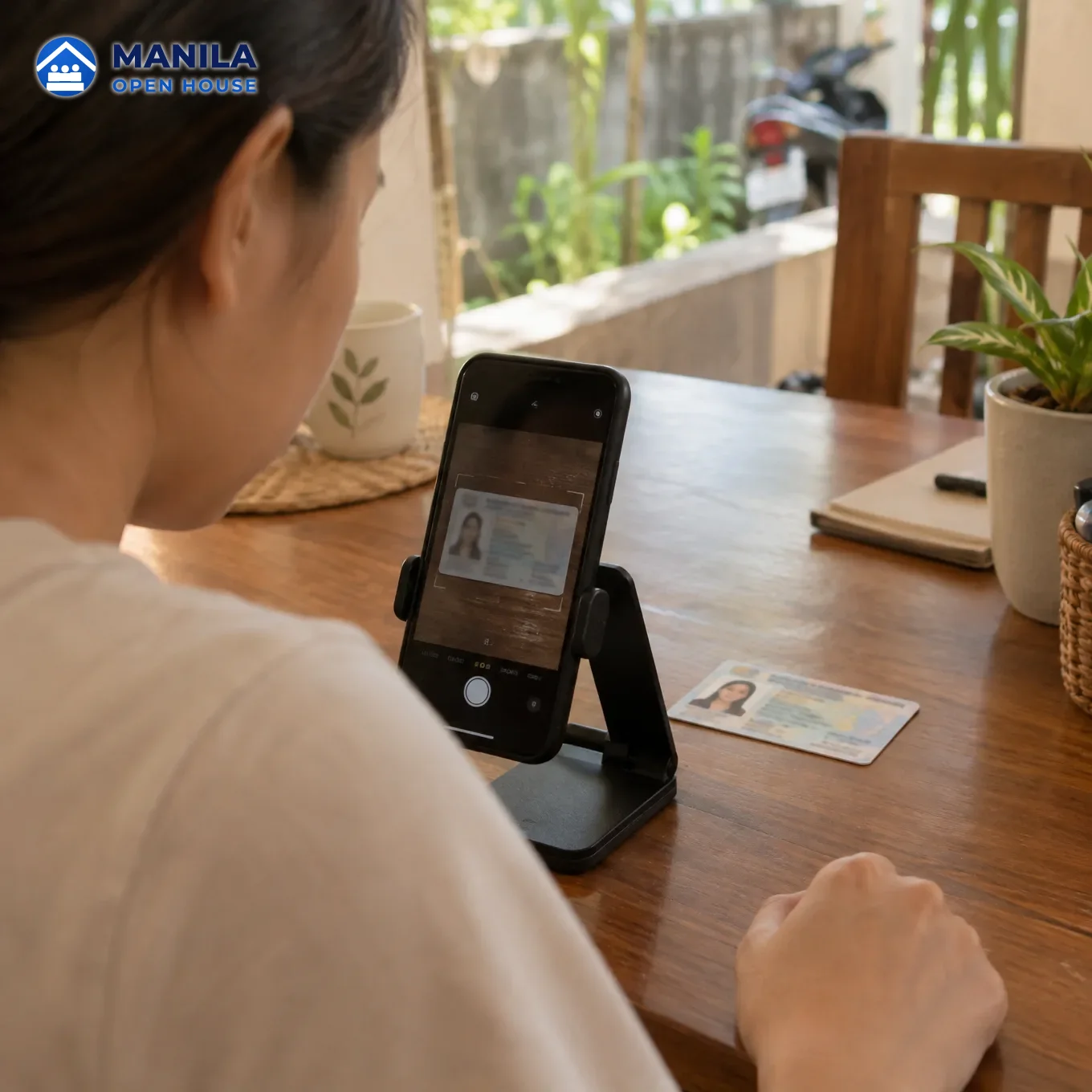
Lay your ID flat in good light and take the selfie facing a window. (Each party; about 5 to 10 min)
Step 4: Choose an ENP

Matching works like ride-hailing, or you schedule a specific ENP from the SC list. (You; about same day to a few days)
Step 5: The session (IEN or REN)

Stay on camera and keep the VPN off. (You + ENP (+ witnesses); about 10 to 30 min)
Step 6: Certificate, seal, register

The ENP finishes the certificate; you e-sign the register entry. (ENP + ENF; about minutes)
Step 7: Pay, download, verify

Save the sealed PDF in the deal folder and screenshot the verification page. (You; about minutes)
What it looks like: sample certificate and sealed page (illustrative)
The Rules prescribe the seal's contents and the 12 items the certificate must show (Rule IX §1, Rule X §2) but do not publish a word-for-word acknowledgment or jurat template; the wording below follows the 2004-Rules forms applied suppletorily (Rule I §3) and the e-Rules' definitions. Names, numbers and dates are fictitious.
A sample Electronic Notarial Certificate
Two versions follow: an acknowledgment (typical for a deed) and a jurat (typical for an affidavit). The seal is shown beside them.
ELECTRONIC NOTARIAL CERTIFICATE
Republic of the Philippines )
City of Makati              ) S.S.
A. Acknowledgment
BEFORE ME, an Electronic Notary Public, on this 19th day of October 2026, by Remote Electronic Notarization through a Supreme Court-accredited Electronic Notarization Facility, virtually appeared JUAN DELA CRUZ, identified through competent evidence of identity (Philippine Passport No. P0000000A, valid until 01 Jan 2030), whose physical location in the Philippines was disclosed and confirmed by geolocation as Quezon City, and who acknowledged to me that the foregoing Deed of Absolute Sale, consisting of 5 pages including this certificate, was electronically signed by them as their free and voluntary act and deed.
Atty. ANA B. REYES — Electronic Notary Public — Philippines
Roll of Attorneys No. 00000
Electronic Notarial Commission No. ENP-2026-000 · valid until 31 December 2027
PTR No. 0000000 issued 05 Jan 2026 at Makati City
IBP Lifetime Membership No. 00000
MCLE Compliance No. VIII-0000000 (05 Jan 2026) · ULAS compliant (2026)
Email: sample@example.ph · Office: 00 Sample St., Makati City
Mode: Remote Electronic Notarization (REN)
Doc. No. 12; Page No. 3; Book No. 1; Series of 2026.
ELECTRONIC NOTARIAL CERTIFICATE
Republic of the Philippines )
City of Makati              ) S.S.
B. Jurat
SUBSCRIBED AND SWORN TO before me, an Electronic Notary Public, on this 19th day of October 2026, by In-Person Electronic Notarization, by MARIA SANTOS, who exhibited competent evidence of identity (PhilID No. 0000-0000-0000-0000), who electronically signed the foregoing Affidavit of Loss in my full view through the Electronic Notarization Facility and took an oath that its contents are true.
Atty. ANA B. REYES — Electronic Notary Public — Philippines
Roll of Attorneys No. 00000
Electronic Notarial Commission No. ENP-2026-000 · valid until 31 December 2027
PTR No. 0000000 issued 05 Jan 2026 at Makati City
IBP Lifetime Membership No. 00000
MCLE Compliance No. VIII-0000000 (05 Jan 2026) · ULAS compliant (2026)
Email: sample@example.ph · Office: 00 Sample St., Makati City
Mode: Remote Electronic Notarization (REN)
Doc. No. 12; Page No. 3; Book No. 1; Series of 2026.
Atty. ANA B. REYESRoll No. 00000
Electronic Notary Public
Republic of the Philippines
Electronic Notary Public
Republic of the Philippines
Seal format per Rule IX §1: Times New Roman 12, 1.5 × 3 inches, with QR/bar code (illustrative). The QR here is a placeholder and cannot be scanned.
A mock-up of a sealed page
E-NOTARIZED · Atty. A. B. Reyes · Doc. No. 12 · Verify: SAMPLE-CODE
What to check:
- Name and Roll No. match the SC list.
- The QR opens the platform's verification page.
- Status shows Notarized.
- Hash and date match.
How much does it cost?
Three fees are official. The one most people care about is not.
| Fee | Who pays | Amount | Status |
|---|---|---|---|
| ENP application (JePS, valid 14 days) | Lawyer | ₱3,000 | Verified |
| ENF accreditation and renewal | Platform | ₱5,000 | Verified |
| ENF cash performance bond | Platform | ₱100,000 | Verified |
| Per-document notarial fee for the public | You | Not yet published | UNVERIFIED |
The first three come from SC payment instructions and the accreditation guidelines.[S11, S1] Rule XII, section 1 defers to any fee guide the SC issues and lets the ENP add reasonable telecom and incidental costs. We found no guide for electronic acts.[S1]
| Platform | What it shows | Status |
|---|---|---|
| NotarizeIT | Service fee from ₱180 per document plus notary fees that vary: the provider's published starting price | UNVERIFIED |
| Twala | ₱500 for a sample acknowledgment in a mock-up, plus a separate identity-verification fee with no amount stated: provider mock-up, not a rate | UNVERIFIED |
| QLegal (NotarioPH) | Not published | UNVERIFIED |
Commentary sites quote fee ranges without an SC source, so we do not repeat them.[S28] Treat any peso quote as the provider's number. Every calculator default is an assumption; edit them.
With the defaults: the traditional route is ₱200 notary fee (assumption) plus ₱300 travel (assumption) plus 3 hours at ₱150 an hour (assumption), a total of ₱950. The electronic route is ₱200 notary fee (assumption) plus ₱180 platform fee (provider's published starting price) plus 45 minutes of your time (assumption), a total of ₱492.50. That saves ₱457.50, about 48 percent, and 2.25 hours. If a platform charges much more, the paper route can win.
The three accredited platforms compared
All three handle IEN and REN under the same SC rules. They differ in flow, identity checks and what they publish about price.

Every claim in the table is the provider's own, from its public page as of 19 October 2026; we did not test the platforms. NotarizeIT's accreditation number is self-reported, and the SC pages we read show none.[S22, S5] To verify a document, use each platform's checker:[S8]
- Twala: https://platform.twala.ai/verify
- QLegal (NotarioPH): https://quanbylegal.com/verify/document
- NotarizeIT: https://app.notarizeit.ph/verify-document
How to choose. Pick the platform your ENP already uses, then compare the total fee shown before you pay, the identity steps, recording and download options, and the verification link.
For lawyers: how to become an ENP
A 2004-Rules commission is neither required nor enough; this is a separate commission.[S4]

Who qualifies: Bar members in good standing with OBC and IBP clearances, MCLE and ULAS compliant, Philippine residents for at least a year with a regular place of work here, and no final conviction for a crime involving moral turpitude.[S1]
How to apply:
- Open the eNotarization Portal through the Philippine Judiciary Platform (open since 10 August 2026).[S3, S11]
- File the form with a photo taken within 30 days, OBC and IBP certifications, proof of compliance, the two undertakings, the platform's training certification and a digital copy of your seal.
- Pay ₱3,000 through JePS; the assessment is valid for 14 days.[S11]
- Attend the virtual summary hearing; oppositions may be filed.[S1, S4]
After commissioning: your term is 2 years from 1 January of the commissioning year, and you renew within 30 days before expiry. The seal is Times New Roman 12, 1.5 by 3 inches, with a QR code. Your certificate shows 12 required items. The Electronic Notarial Book lives in the platform, with a duplicate copy kept by you. Send monthly reports during the transitional period, retain records for the commission term, and report a data breach within 72 hours. You may use several platforms, one account each.[S1, S12]
For property buyers, sellers, brokers and landlords
This is where e-notarization pays off. Where a receiving office has said nothing public, we say so.

1. OFW buyer signs an SPA
The buyer must be inside a Philippine embassy or consulate for the session. A living-room signing abroad is not allowed yet.
2. Condo deed with sellers in two cities
Use REN. Each seller has an account and joins the same live session. The deed is an acknowledgment, so it may be pre-signed and confirmed. Check your Register of Deeds for submission steps.
3. Lease renewals
An acknowledgment document. Landlord and tenant each need an account for REN.
4. Broker authority to sell
The owner's written authority can be e-notarized as an acknowledgment. Keep the sealed PDF in the listing file.
5. HOA or condo corporation certificates
Secretary's Certificates and board resolutions are acknowledgment documents, and the SEC circular covers SEC filings. Upload proof of authority.
6. Extrajudicial settlement with heirs abroad
The embassy rule limits this. Taxes and publication requirements are unchanged.
7. Bank loan documents
We found no public bank guidance on accepting e-notarized loan papers. Ask your loan officer first. UNVERIFIED
8. BIR eCAR submissions
We found no BIR issuance on e-notarized documents. Ask your RDO first. UNVERIFIED
9. Register of Deeds presentation
The SC-LRA circular is why this matters, but we could not read it. Confirm submission steps with the Register of Deeds. UNVERIFIED

For brokers: build a ready-to-sign PDF workflow, collect unexpired IDs early, pick the ENP before the time slot, tell clients one account each, keep the QR screenshot and sealed PDF in the deal folder, and ask the receiving office first.
Verification, privacy and penalties
Scan the QR on the seal, or use the SC's Document Verification Portal, which routes to the issuing platform's checker. The seal shows the notary's name and Roll number, so you can match it to the SC list.[S8, S7]
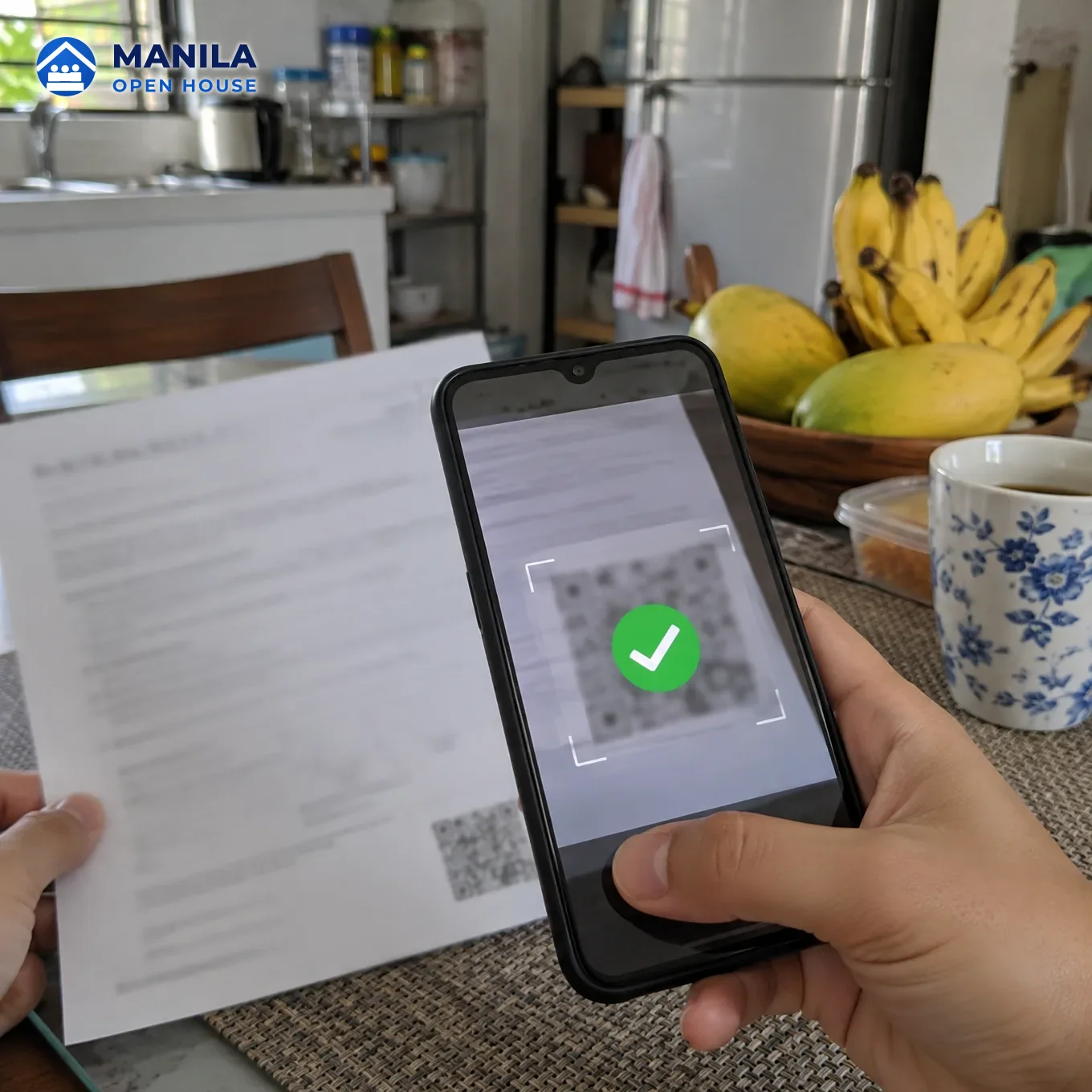
The ENP must keep contents confidential. Platforms sign a Data Outsourcing Agreement with the SC requiring AES-256 encryption, multi-factor access and 12-hour incident reporting. Copies go to the Central Notarial Database, or by monthly transmittal to the ENA during the transitional period; whether the database is live on day one is unclear to us.[S13, S12, S1] UNVERIFIED Recording is optional, at the principal's request, and the platform must let you download it.[S1, S4]

| Who | What | Basis |
|---|---|---|
| Anyone | Using a VPN or extension to fake location during notarization | Rule XII §3(e) |
| Anyone | Impersonating an ENP; falsifying or destroying seals, Books or records; tampering with security measures | Rule XII §3(a)–(c) |
| Any provider | Offering an ENF without a valid Certificate of Accreditation — contempt and sanctions | Rule XII §3(f); Guidelines Rule III §10 |
| ENP | Revocation/sanctions for false or incomplete certificates, missing Book entries, notarizing without presence, acting from outside PH | Rule XI §3 |
| ENF Provider | Bond forfeiture for ≥15 hours downtime, letting expired ENPs in, data breach or late breach report, operating without renewal | Guidelines Rule III §8 |
10 common mistakes
- Pre-signing an affidavit. A jurat must be signed live.
- Sharing one account. Each principal and witness needs their own.
- Using a VPN. Location checks block it and the Rules punish it.
- Using an expired ID. The platform locks you out.
- Being abroad outside an embassy. Only embassy, consulate or honorary consul premises qualify.
- Uploading the wrong file type. It must be a PDF, not a DOCX or JPG.
- Assuming every office accepts it. Banks and agencies may want to check first.
- Assuming the fee is fixed. There is no official per-document schedule yet.
- Forgetting proof of corporate authority. Upload the board authority.
- Expecting a paper original. The sealed PDF is the original; print a copy if you need one.
Pros and cons

Pros
- No travel; the ENP can be anywhere in the Philippines.
- Same legal force as paper notarization.
- Sealed PDF with a QR anyone can verify.
- The LRA and SEC have acceptance circulars.
Cons
- No official fee schedule yet UNVERIFIED.
- Needs a camera, internet and an ID that passes e-KYC.
- Abroad only from an embassy or consulate.
- Bank and BIR acceptance unconfirmed UNVERIFIED.
12 FAQ
Is an e-notarized document as valid as a paper one?
Yes. Rule I §5 of A.M. No. 24-10-14-SC gives any act performed under the Rules the same validity, force and effect as notarization under the 2004 Rules. The LRA/Registers of Deeds and the SEC formalised acceptance in Joint Memorandum Circulars signed 13 October 2026. Other offices (banks, BIR) have not issued public guidance we could find — ask first. [S1, S10]
Can I notarize from abroad?
Only if you are physically inside a Philippine embassy, consulate or honorary consul's office during the session; you pan the camera and a post officer confirms you are there (Rule IV §5). From your apartment in Dubai: not yet. The Supreme Court says it is in talks with the DFA about OFW access. [S1, S10]
Do I need to be in the same city as the notary?
No. ENPs may serve principals anywhere in the Philippines (Rule VI §9). Traditional notaries remain limited to their territorial commission. [S1]
Which documents cannot be e-notarized?
Notarial wills, depositions, and paper documents with wet-ink signatures or marks (Rule I §5). A scanned copy of a signed paper document counts as an electronic document, but only for acknowledgments, oaths and affirmations — never for a jurat. [S1, S4]
Should I sign the PDF before uploading?
Not if it needs a jurat (affidavits): you must sign on camera, in the ENP's full view, then take the oath. Acknowledgments and sworn statements may be pre-signed; you confirm the signature is yours. [S1, S4]
What ID do I need?
One valid government ID with your photo and signature (passport, driver's licence, UMID, PRC, Postal ID, SSS, GSIS, PhilHealth, senior/PWD ID, OFW/OWWA ID, TIN ID, LGU ID and others), or the PhilID, or the IBP/Bar ID (Rule I §4(b)). The ENF runs e-KYC with a liveness selfie and multi-factor login. Expired IDs are blocked by the platform. [S1]
Can my spouse and I use one account on one phone?
No. Each principal and each witness must have their own ENF account because the platform verifies each person's identity separately (SC FAQ). [S4]
Is the video session recorded?
It may be. Recording is at the principal's request and for the principal's benefit; the ENF must let you record and download it (Rule IV §8; SC FAQ). Pre-recorded videos are strictly prohibited. [S1, S4]
How much does it cost?
Verified: ₱3,000 for a lawyer's ENP application; ₱5,000 plus a ₱100,000 bond for a platform's accreditation. Per-document notarial fees for the public: no Supreme Court fee guide has been published that we could find (UNVERIFIED). NotarizeIT advertises a service fee from ₱180 per document plus the notary's fee; Twala shows ₱500 as a sample acknowledgment. Rule XII §1 also lets the ENP add reasonable telecommunication and incidental costs. [S11, S1, S21, S22]
How do I check a document someone sent me?
Scan the QR on the seal or open the Supreme Court's Document Verification Portal, which routes to the issuing platform's verifier (notarizeit, twala, quanbylegal). The ENP's name and Roll number are on the seal; the SC posts the list of commissioned ENPs. [S8, S7]
Who sees my document?
The ENP (bound by confidentiality, Rule XII §7), the ENF (under a Data Outsourcing Agreement with the SC that requires AES-256 encryption, MFA and 12-hour breach reporting), and the Supreme Court's Central Notarial Database (or the ENA by monthly transmittal during the transitional period). The ENP must give you a data-privacy notice before the act. [S1, S13, S12]
Can any lawyer do this?
Only lawyers commissioned as ENPs by the Electronic Notary Administrator: Bar members in good standing, MCLE and ULAS compliant, PH residents for at least a year, no conviction for moral turpitude, who pass a virtual summary hearing. A 2004-Rules commission is neither required nor sufficient. 100 lawyers were commissioned in the first batch (list as of 25 Sep 2026). [S1, S4, S7]
What we could not verify
These gaps are real; do not treat them as settled.
- Official per-act notarial fee schedule for electronic acts: no SC guide found. UNVERIFIED
- Certified-true-copy fee: left to the SC, no amount found. UNVERIFIED
- Whether the Central Notarial Database is live on 19 October 2026, i.e. whether the Transitional Period has ended. Status unclear. UNVERIFIED
- JMC numbers, titles and full texts; the SC pages returned errors. UNVERIFIED
- DFA apostille treatment, and BIR and bank acceptance in practice. UNVERIFIED
- Platform and identity-verification fees in practice, and refund policies. UNVERIFIED
- Accreditation numbers and dates for Twala and QLegal, and whether QLegal trades publicly as NotarioPH. UNVERIFIED
- The target of the helpdesk shortlink in the SC post. UNVERIFIED
- Whether ENPs can already be randomly paired on every platform. UNVERIFIED
Corrections? Email manilaopenhouse@gmail.com.
Sources
- S1. A.M. No. 24-10-14-SC — Rules on Electronic Notarization and Guidelines on the Accreditation of ENF Providers (SC E-Library full text, 4 Feb 2025)
https://elibrary.judiciary.gov.ph/thebookshelf/showdocs/11/98644 - S2. A.M. No. 24-10-14-SC — official PDF, published 9 March 2025
https://sc.judiciary.gov.ph/wp-content/uploads/2025/03/A.M.-No.-24-10-14-SC-Feb.-4-2025-published-3.9.25.pdf - S3. Supreme Court eNotarization microsite (Electronic Notary Services)
https://sc.judiciary.gov.ph/enotarization/ - S4. SC eNotarization — Frequently Asked Questions
https://sc.judiciary.gov.ph/enotarization/faqs/ - S5. SC eNotarization — Registration Portal (accredited ENFs)
https://sc.judiciary.gov.ph/enotarization/registration-portal/ - S6. SC eNotarization — List of Commissioned ENPs
https://sc.judiciary.gov.ph/enotarization/commissioned-enps/ - S7. OBC-ENS — List of Supreme Court Commissioned Electronic Notaries Public (as of 25 Sep 2026)
https://sc.judiciary.gov.ph/wp-content/uploads/2026/09/ENS-First-Batch-of-Commissioned-ENPs-signed-092526.pdf - S8. SC eNotarization — Document Verification Portal
https://sc.judiciary.gov.ph/enotarization/document-verification-portal/ - S9. SC eNotarization — ENFs Instructional Videos
https://sc.judiciary.gov.ph/enotarization/enfs-instructional-videos/ - S10. SC press release, 15 Oct 2026 — eNotarization partnership with LRA and SEC (JMCs signed 13 Oct 2026)
https://sc.judiciary.gov.ph/sc-strengthens-digital-transformation-through-enotarization-partnership-with-lra-and-sec/ - S11. OBC-ENS — ENP Application Fee Payment Instructions (JePS, Php 3,000)
https://sc.judiciary.gov.ph/wp-content/uploads/2026/08/ENS-ENP-Payment-Instructions.pdf - S12. Electronic Notarization Data Sharing Guidelines (April 2026)
https://sc.judiciary.gov.ph/wp-content/uploads/2026/04/Electronic-Notarization-Data-Sharing-Guidelines.pdf - S13. ENS Data Outsourcing Agreement template for ENF Providers (June 2026)
https://sc.judiciary.gov.ph/wp-content/uploads/2026/06/ENS-Data-Outsourcing-Agreement.pdf - S14. OCA Circular No. 61-2025 — transmittal of the Rules on Electronic Notarization
https://oca.judiciary.gov.ph/wp-content/uploads/OCA-Circular-No.-61-2025.pdf - S15. radar.ph — Online notarization officially begins in the Philippines today (19 Oct 2026)
https://radar.ph/online-notarization-officially-begins-in-the-philippines-today/ - S16. astig.ph — SC signs e-notarization JMCs with LRA and SEC; rollout 19 Oct
https://astig.ph/supreme-court-e-notarization-land-business-documents-october-19-2026/ - S17. Daily Tribune — SC clears way for electronically notarized land, business documents (15 Oct 2026)
https://tribune.net.ph/2026/10/15/sc-clears-way-for-electronically-notarized-land-business-documents - S18. Newsbytes.PH — SC brings notarization online with eNotary system (6 Aug 2026)
https://newsbytes.ph/2026/08/06/sc-brings-notarization-online-with-enotary-system/ - S19. Philstar Life — Need a document notarized? Here's how you can do it online (5 Aug 2026)
https://philstarlife.com/amp/article/113380-how-to-get-documents-e-notarized - S20. Manila Times — PH enters eNotarization era as SC accredits Twala (10 Aug 2026)
https://www.manilatimes.net/2026/08/10/tmt-newswire/ph-enters-enotarization-era-as-supreme-court-accredits-twala-as-enotary-facility/2401546 - S21. Twala — Electronic Notarization Facility (provider page)
https://www.twala.ai/enotary - S22. NotarizeIT by UNAWA — Electronic Notarization Facility (provider page)
https://notarizeit.ph/ - S23. BitPinas — Gorriceta, Quanby to launch NotarioPH by QLegal (6 Aug 2026)
https://bitpinas.com/fintech/gorriceta-quanby-notarioph/ - S24. Aureada Law — The Supreme Court opens accreditation for ENF providers (9 Dec 2025)
https://www.aureadalaw.com/post/the-supreme-court-opens-accreditation-for-electronic-notarization-providers - S25. Alburo Law — Rules on Electronic Notarization under A.M. No. 24-10-14-SC
https://www.alburolaw.com/rules-on-electronic-notarization-under-a-m-no-24-10-14-sc/ - S26. YDL Law — The SC's new Rules on Electronic Notarization
https://www.ydllaw.com/the-scs-new-rules-on-electronic-notarization/ - S27. ACCRALAW — From Paper to PDF: the digital shift in Philippine notarization (26 Mar 2025)
https://accralaw.com/2025/03/26/from-paper-to-pdf-the-digital-shift-in-philippine-notarization/ - S28. Respicio & Co. — Fees for electronic notarization (commentary; figures unverified)
https://www.respicio.ph/commentaries/fees-for-electronic-notarization-of-documents-in-the-philippines
Photos




















Related articles

BIR Registration Seal Badge 2026: Who Must Display It, How to Apply, Deadline Oct 31 and Penalties
If you sell, teach, create or advertise online in the Philippines, the BIR now expects a small QR badge on your shop, page or site showing that you are…

BIR Survival Guide for Online Solopreneurs in the Philippines 2026
Your first online sale feels exciting until someone asks for your Bureau of Internal Revenue (BIR) registration. Whether you ship from a condo, cook in your…

E-Invoicing in the Philippines 2026: What the New BIR Rules Require, Who Must Comply, and the Penalties for Getting It Wrong
By 31 December 2026, many Philippine businesses that sell online, or that run their books on accounting or invoicing software, must stop handing out paper or…