
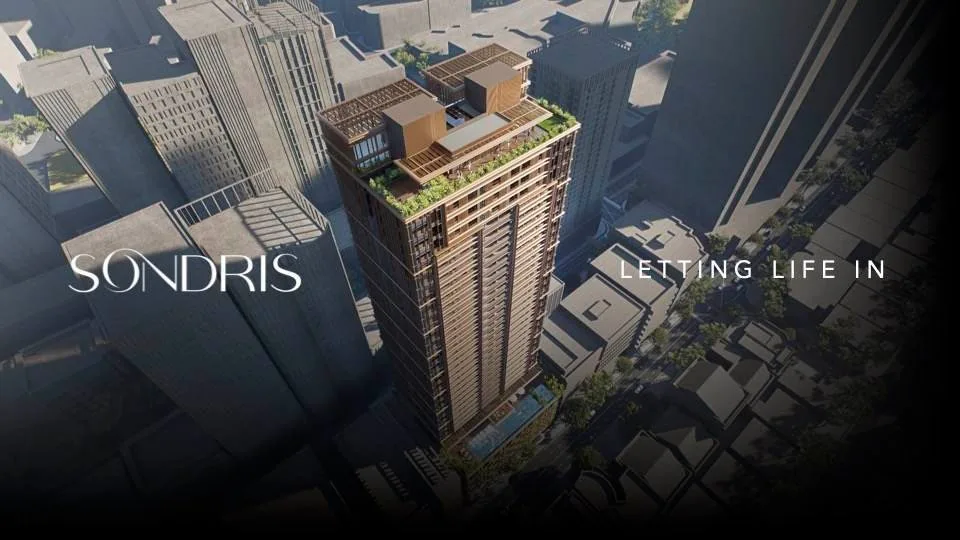
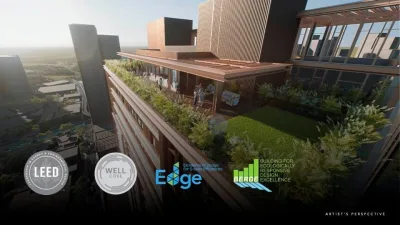
Most Philippine condominiums pursue one green-building certification, if any. Sondris, the Arthaland x Mitsui Fudosan tower rising in Legazpi Village, Makati, is targeting four at once — LEED Gold, WELL Core, EDGE and BERDE. The video walkthrough above gives you the visual tour; this article breaks down what each certification actually measures, how a developer earns one, what the claimed utility savings really mean in numbers, and whether the investment case holds up — plus the full unit pricing, a 10% downpayment breakdown, the neighborhood map, and links to every other Arthaland project we've covered.
4
Certifications Targeted
40%
Energy Reduction Target
20%
Water Reduction Target
252 / 37
Units / Floors
The 4 Certifications, Explained
Each certification measures a different thing, comes from a different authority, and matters to a different type of buyer. Here's what Sondris is actually being evaluated against.
LEED
LEED Gold
U.S. Green Building Council (USGBC)The world's most widely used green building rating system, evaluating site development, water and energy efficiency, materials, and indoor environmental quality. Gold is the second-highest of four tiers (Certified, Silver, Gold, Platinum).
Why it mattersInternationally recognized by multinational corporate tenants and relocating expats — often a direct factor in resale value and rental demand.
WELL
WELL Core
International WELL Building Institute (IWBI)Focused specifically on human health, not just environmental performance — covering air, water, light, movement, thermal comfort, acoustics, and mental wellbeing.
Why it mattersValidates the building's air quality, daylight, and acoustic comfort claims — increasingly a priority for residents since the pandemic.
EDGE
EDGE
International Finance Corporation (World Bank Group)Requires a minimum 20% reduction in energy, water, and embodied materials energy versus a standard local building, using a methodology built specifically for emerging markets.
Why it mattersA measurable, third-party benchmark for utility savings that residents actually feel in lower electricity and water bills.
BERDE
BERDE
Philippine Green Building Council (PHILGBC)The Philippines' own national green building rating system, calibrated to local climate, materials, and building practice, and referenced directly in the Philippine Green Building Code.
Why it mattersConfirms the building meets locally-relevant, regulator-recognized sustainability standards — not just an imported foreign benchmark.
Why pursuing all four together is rare
Combining LEED (a global sustainability benchmark), WELL (a human-health standard), EDGE (a resource-efficiency benchmark built for markets like the Philippines) and BERDE (the country's own regulator-recognized system) means a project is being checked against four independent sets of auditors, not one marketing department. Developments with credible, verified certification consistently command stronger resale and rental interest over time — precisely because the claims are checkable, not just printed on a brochure.
How a Developer Actually Earns These Certifications
"Green certified" isn't a sticker a developer buys — it's a multi-year process audited by an outside body. Here's the general pathway every one of these four systems follows, from design table to final award:
- Design & RegistrationThe project is registered with the certifying body (USGBC, IWBI, IFC or PHILGBC) early in design, and the design team commits to specific, measurable targets — envelope performance, fixture flow rates, air-change rates — rather than vague "eco-friendly" language.
- Energy & Water ModelingEngineers run energy and water simulations comparing the proposed design against a code-minimum baseline building of the same size and use. This is where the "40% lower energy, 20% lower water" style targets come from — they're modeled reductions versus that baseline, not guesses.
- Construction-Phase VerificationAs the tower is built, documentation and, in many cases, site audits confirm the specified materials, glazing, fixtures, and systems were actually installed — not value-engineered out to cut cost.
- Commissioning & Performance TestingMechanical, electrical, and plumbing systems are tested to confirm they perform as designed before occupancy — air filtration rates, DOAS fresh-air delivery, and water fixture flow rates are among the items typically verified.
- Third-Party Review & AwardAn independent reviewer (not the developer, not the architect) scores the submitted documentation against each system's checklist and issues the certification level — Certified, Silver, Gold, or Platinum for LEED; a pass/fail EDGE threshold; a WELL score band; or a BERDE star rating.
Status note: Sondris is targeting LEED Gold, WELL, EDGE and BERDE — the certifications are goals the design has been engineered against, not yet-awarded plaques. This is standard and expected for a pre-selling development; the formal award for most systems is finalized closer to or after construction completion and commissioning. Ask your agent for the current certification status before reserving if this is a deciding factor for you.
The Real Numbers: Utility Savings
Here's what the certification targets translate to, expressed as an index against a conventional Makati CBD tower of the same size (100 = conventional baseline):
Energy & Water Use — Conventional vs. Sondris Target
Indexed consumption (100 = same-size conventional CBD tower)
Conventional CBD tower (baseline)
Sondris (engineered target)
Source: Arthaland/Sondris published design targets, as stated on the Sondris executive summary. These are developer-stated engineering targets from the EDGE-methodology modeling described above, not independently audited utility bills — real-world savings vary with occupant behavior, unit orientation, and appliance use.
Illustrative example (not a Sondris-specific measurement): a commonly cited ballpark for a 1BR Metro Manila CBD condo's monthly electricity bill is around ₱4,500 under prevailing Meralco residential rates for a typically air-conditioned unit. Applying the 40% target reduction would trend that toward roughly ₱2,700/month — a plausible directional estimate, not a guarantee. Your actual bill depends on unit size, appliance load, and how much you run the air conditioning.
The engineering behind those numbers: a Dedicated Outdoor Air System (DOAS) for continuous fresh-air supply, lab-grade air filtration with carbon monoxide monitoring, double-glazed, energy-efficient facade with a controlled glass-to-concrete ratio, low-flow plumbing fixtures, and a rainwater harvesting system. These aren't marketing bullet points — each one maps directly to a line item measured in the EDGE energy/water model described above.
Unit Pricing & Your Downpayment
Sondris residences run from a 45.58 sqm 1-Bedroom to a 179.76 sqm Garden 3-Bedroom. Here's the full breakdown, including what a 10% downpayment actually costs in both PHP and USD.
| Unit Type | Size (sqm) | Total Contract Price | Published DP Schedule* | 10% Planning Figure (PHP) | 10% Planning Figure (≈USD) |
|---|---|---|---|---|---|
| 1BR | 45.58 | ₱23,312,250 | ₱2,231,600 | ₱2,331,225 | ≈$39,850 |
| 2BR | 117.26 | ₱68,477,384 | ₱6,555,100 | ₱6,847,738 | ≈$117,055 |
| 3BR | 135.35 | ₱87,718,661 | ₱8,397,000 | ₱8,771,866 | ≈$149,946 |
| 3BR (Large) | 137.34 | ₱90,149,545 | — | ₱9,014,955 | ≈$154,102 |
| Garden 3BR | 179.76 | ₱101,362,741 | — | ₱10,136,274 | ≈$173,270 |
*On the published schedule: the executive summary page labels its downpayment figure "20%, incl. reservation," but the peso amount shown (e.g. ₱2,231,600 for the 1BR) actually works out to about 9.6% of Total Contract Price, consistently across every unit type shown — so treat that column as the page's literal published figure, not a verified 20% share. The 10% Planning Figure columns are our own plain arithmetic (10% × Total Contract Price) to answer "what does a 10% downpayment cost," not an Arthaland-confirmed payment scheme. USD figures use an assumed reference rate of ₱58.50 = US$1 for illustration only — PHP is the official contract currency; always confirm the live rate and the actual required equity percentage with Arthaland or ManilaOpenHouse before reserving.
Price per Square Meter by Unit Type
Total Contract Price ÷ floor area
Source: Sondris official price list, via manilaopenhouse.com/property/sondris-executive-summary.html. Figures as published August 2026 — subject to change; verify against the current official price list.
See Every Unit, Live Calculators & the 360° Tour
The full interactive executive summary has a live loan calculator, a transfer-cost estimator, an investment-return model, and the complete 360° virtual walkthrough.
Executive Summary: Is Sondris a Good Long-Term Investment?
Stripping away the brochure language, here's the actual investment thesis, and where it's strongest versus where it's a bet on the future:
Entry Price Point
₱23.3M
Among the most accessible pre-selling entry points for a Legazpi Village tower.
Development Scale
252 units
Boutique, low-density footprint versus typical 400–600+ unit Makati CBD towers.
Green Building Premium
4 certs
LEED Gold, WELL, EDGE & BERDE targeted — historically supports stronger resale and rental demand.
Parking Ratio
249 / 252
Near 1:1 slot-to-unit ratio, uncommon in dense Makati CBD developments.
Rental Demand Pool
High
Corporate and expat leasing demand concentrated near AIM, Greenbelt, and Makati CBD offices.
Airport Access
Direct
Skyway/EDSA on-ramp via Arnaiz Avenue shortens the run to NAIA for frequent travelers.
The case for it: a boutique, low-density tower in an already-mature, walkable CBD, from a developer (Arthaland) whose entire brand is built on sustainability credibility, in partnership with a global-scale co-developer (Mitsui Fudosan). The four-certification target is a genuine differentiator most competing Makati pre-selling stock doesn't attempt, and it's backed by measurable engineering (DOAS, double-glazed facade, low-flow plumbing) rather than just signage. Multinational corporate tenants and relocating expats — the segment most willing to pay a premium for verified sustainability and wellness credentials — are exactly who Legazpi Village's rental market already attracts.
The honest risk side: this is a pre-selling development — certifications are targets, not yet-awarded plaques, and Makati CBD condo supply has had soft patches before. Per-sqm pricing (₱511,500–₱648,100) sits at a premium versus older CBD stock, and that premium only pays off if the certifications are actually awarded and the green-building resale/rental premium holds in your specific holding period. Treat the appreciation and rental-yield figures in the live calculator as planning inputs, not guarantees — model your own downside case before committing equity.
Location, Landmarks & Accessibility
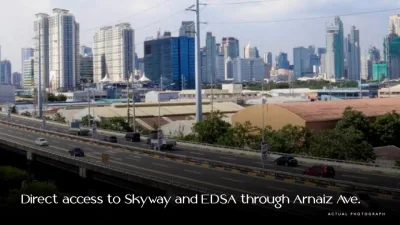
Sondris sits at Arnaiz Avenue corner Benavidez Street, Legazpi Village, Makati City — inside the established Makati Central Business District, with direct Skyway/EDSA access via Arnaiz Avenue.
GreenbeltShopping, dining, and entertainment complex
Asian Institute of ManagementPremier graduate business school
Washington SyCip ParkGreen open space within the Makati CBD
Makati Medical CenterLeading private hospital
GloriettaMajor shopping and lifestyle mall
Skyway & EDSA AccessDirect connectivity via Arnaiz Avenue
NAIA AirportNinoy Aquino International Airport, via Skyway
Safety, Security & Wellness Engineering
Legazpi Village sits within Makati's Central Business District — one of Metro Manila's most established and consistently well-patrolled commercial districts, with 24/7 foot traffic from surrounding offices, embassies, and retail. On the building level, several of the same systems behind the green certifications double as health and safety features:
Carbon Monoxide MonitoringLab-grade air filtration paired with active CO monitoring, part of the WELL-aligned air quality system.
Dedicated Parcel Delivery AreaA secure basement-level facility where personnel log and hold packages, reducing porch/lobby theft risk.
Near 1:1 Parking Ratio249 slots for 252 units reduces vehicle congestion and crowding versus typical CBD tower ratios.
Low-Density Footprint252 units across 37 floors is meaningfully lower density than the 400–600+ unit towers common in the Makati CBD.
Airtight, Acoustic UnitsOperable windows engineered for sound and odor control between units.
Dedicated Outdoor Air SystemContinuous fresh-air supply engineered into every unit, independent of individual air-conditioning use.
Structural, fire, and life-safety systems (fire exits, sprinklers, backup generators, smoke control) follow standard Philippine Building Code and Fire Code requirements applicable to every licensed high-rise development. Ask your agent or Arthaland directly for the specific fire-safety and structural specifications if these are a deciding factor for you.
More Arthaland Developments
Sondris isn't Arthaland's only green-building play. We've covered three other Arthaland developments on the blog:
Una Apartments at Sevina ParkArthaland · Biñan, Laguna
Savya Financial CenterArthaland x Mitsubishi Estate · ARCA South, Taguig
Liv NorthArthaland · Katipunan, Quezon City
Sondris (Premium Listing)Arthaland x Mitsui Fudosan · Legazpi Village, Makati
Quick FAQ
Is a 10% downpayment actually offered by Arthaland for Sondris?
Not confirmed. The official executive summary shows a downpayment figure that works out to roughly 9.6% of Total Contract Price, labeled "20%, incl. reservation" — an apparent inconsistency on the source page. The 10% figures in this article are our own plain arithmetic (10% × Total Contract Price), meant as a planning number, not a confirmed Arthaland payment scheme. Confirm the actual required equity and payment terms directly with Arthaland or your ManilaOpenHouse agent before reserving.
Are LEED Gold, WELL, EDGE and BERDE already awarded, or just targeted?
Targeted. Sondris is a pre-selling development, and formal certification awards for systems like LEED and BERDE are typically finalized at or after construction completion and commissioning, not at the design stage. The engineering (DOAS, double-glazed facade, low-flow fixtures, rainwater harvesting) is being built toward these targets now.
How much can I actually save on electricity and water?
Arthaland's published engineering targets are 40% lower energy and 20% lower water versus a conventional CBD tower of the same size, modeled against a code-minimum baseline as part of the EDGE certification process. These are developer-stated design targets, not independently audited utility bills — your real savings depend on unit orientation, appliance load, and how you use the space.
Ready to Explore Sondris?
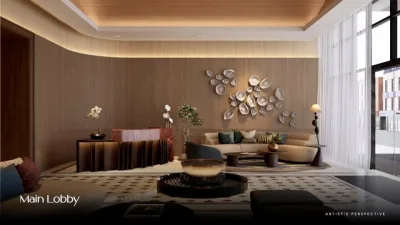
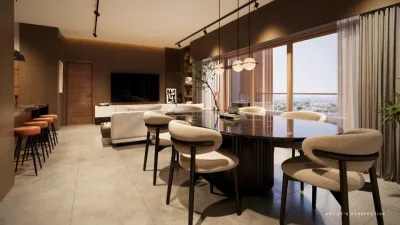
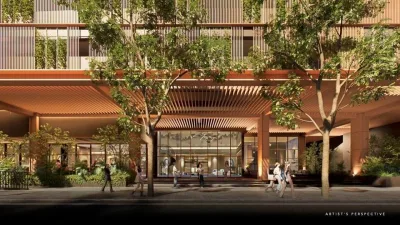
View the full premium listing for live calculators, the complete unit comparison, photo gallery, and the 360° virtual tour.
Watch
Photos
Related articles
 ▶ Video
 Philippine Coffee 2026: Health Facts, Farm Land, Bean Types and the Real Cafe Math
For two years in the 1880s, the Philippines was the world's coffee. In 1880 it was briefly the fourth-largest coffee exporter on Earth. Then a leaf-rust…

Airbnb or Long-Term Lease in the Philippines, 2026: Is Short-Term Rental Really "Passive Income," and Where It Actually Pays — BGC to Siargao
Every few weeks, someone on r/phinvest posts the same question in a different unit: "I own a condo — should I rent it out long-term, or put it on Airbnb?" It…
Warehouse Investing in the Philippines, 2026: 8 Corridors Ranked by Lease Rate, Port Access, Flood Risk and 10-Wheeler Reach — and the Questions First-Time Industrial Investors Forget to Ask
The Philippines' industrial and warehouse segment closed 2025 at 97.1% occupancy — forecast to tighten further to 97.6% in 2026 — making it one of the least…